

📰 FULL ARTICLE CONTENT
INTRO
What do 81,000 people from 159 countries really think about AI? Anthropic just found out — and the results are shocking, surprising, and deeply important for every single person on the planet. The company behind Claude AI conducted one of the largest global studies ever done on what people actually want from artificial intelligence — and what worries them about its future. This is not a technology story. This is a human story. And it changes everything about how we think about AI right now.
Why The Anthropic Study Matters For Everyone
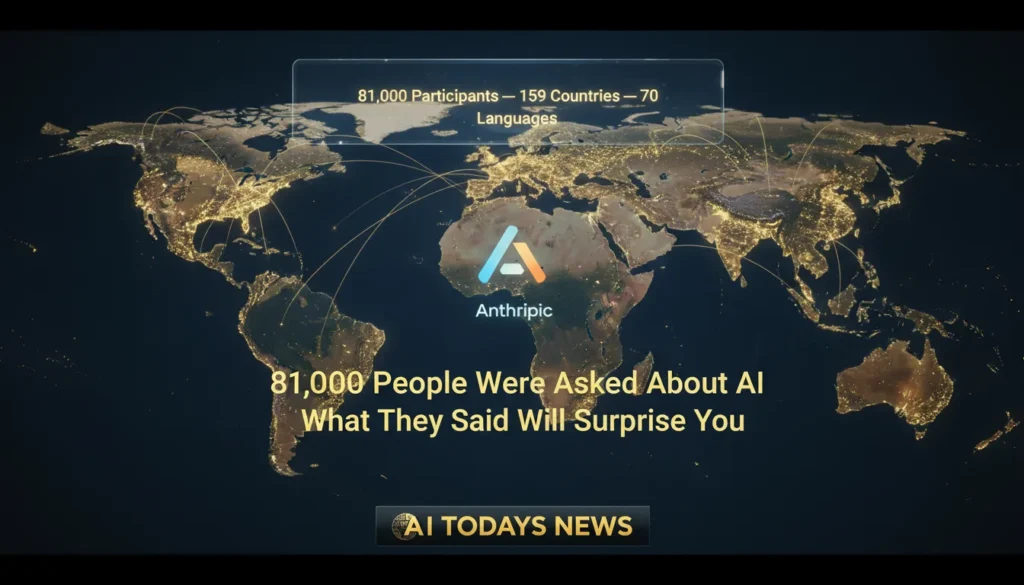
This is not just another tech company survey. This is the most comprehensive global study of human expectations about AI ever conducted. Eighty-one thousand people. One hundred and fifty-nine countries. Seventy languages. The scale of this research is unprecedented.
Anthropic did something remarkably clever to collect this data. In December last year, they introduced Claude Interviewer — a specialized AI model that conducted open-ended conversations with participants in their own language. This meant people could express their real thoughts and feelings about AI in a natural, comfortable way — not just tick boxes on a form.
The responses were then analyzed and categorized using Claude-powered AI systems — making this one of the first major studies where AI was used to understand what humans think about AI itself.
The results paint a fascinating and deeply human picture of where the world stands right now on artificial intelligence. And every single person — whether they use AI or not — needs to understand what these results mean.
What People Really Want From AI — The Anthropic Study Results
The most important finding from the Anthropic study is this — people around the world are not afraid of AI. They want to use it. They want it to make their lives better. But they want it on their terms.
When participants were asked what they most wanted from AI, the top answer was professional excellence — cited by 18.8 percent of respondents. These are people who want AI to help them do their jobs better, faster, and more effectively than they could do alone.
The second most popular answer was personal transformation — cited by 13.7 percent of participants. These are people who see AI not just as a work tool but as something that can fundamentally change who they are — helping them learn faster, grow more, and become better versions of themselves.
The most common practical use case people described was using AI to handle routine and repetitive tasks — freeing up their time and mental energy for more strategic, creative, and complex work. This is the everyday reality of AI adoption right now — not dramatic robot takeovers, but quiet efficiency gains that give people back something they never have enough of — time.
Many participants also noted that AI helps them focus on what actually matters. When the boring work is handled automatically, people can spend more time on the things that genuinely require human judgment, creativity, and emotional intelligence.
Real World Impact — What Worries People About AI
The Anthropic study did not just ask what people want from AI. It also asked what worries them. And the concerns people raised are just as important as their hopes.
The two biggest worries that emerged from the global study are reliability and job risk. People want AI to work — but they are not yet fully confident that it will. They have experienced AI making mistakes, giving wrong information, and behaving unpredictably. Until AI becomes more consistently reliable, many people will remain cautious about trusting it completely.
Job risk is the other major concern — and it is a worry that crosses every country, culture, and income level. People around the world are genuinely uncertain about what AI means for their employment future. Will AI take their job? Will it change their job so dramatically that their current skills become worthless? These are real fears — and they deserve honest, thoughtful answers.
What is particularly interesting is that both of these worries exist alongside genuine enthusiasm for AI. The same people who are worried about job risks are also excited about professional excellence. The same people who are concerned about reliability are also using AI every day to handle their routine tasks.
This is the complex, nuanced reality of how the world actually feels about AI right now — not simply afraid, not simply excited, but both at the same time.
The Future of AI — What This Study Tells Us
The Anthropic study gives us something incredibly valuable — a real, honest, global snapshot of where humanity stands in its relationship with artificial intelligence right now. And what it tells us about the future is both encouraging and important.
The fact that 81,000 people from 159 countries participated tells us that AI is no longer just a concern for wealthy, tech-savvy countries. It is a global conversation. People in every corner of the world are thinking about AI, using AI, and forming opinions about what it should and should not do.
The fact that professional excellence is the top expectation tells us that people fundamentally see AI as a tool for human empowerment — not human replacement. They want AI to make them better at what they do — not to do it instead of them.
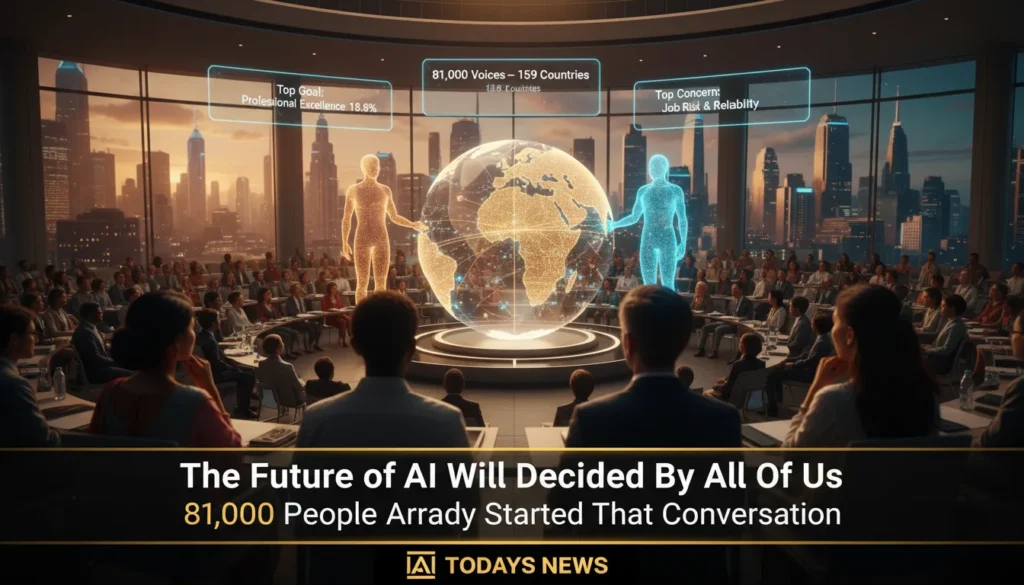
And the fact that job risk is a top concern tells us that the AI industry has serious work to do in communicating clearly and honestly about how AI will affect employment. The fear is real. The responsibility to address it thoughtfully is equally real.
The future of AI will be shaped not just by what technology can do — but by what humanity decides it should do. And studies like this one from Anthropic are essential stepping stones on that journey.
✅ BENEFITS SECTION
- Shows exactly what people around the world really want from AI in simple terms
- Helps businesses understand how to position AI tools for maximum human acceptance
- Gives job seekers clarity on how to use AI to improve their professional performance
- Reveals that most people see AI as an empowerment tool — not a replacement threat
- Highlights the importance of AI reliability as the next major challenge to solve
- Proves that AI adoption is a truly global phenomenon — not just a Western trend
- Shows that personal transformation through AI is a major goal for millions of people
- Helps AI companies understand what improvements matter most to real users worldwide
- Gives governments and policymakers real data to inform fair and effective AI regulation
- Demonstrates that open honest conversations about AI fears can lead to better outcomes
- Proves that diverse global voices must be included in every major AI decision made
- Gives everyday users the confidence to engage with AI on their own terms and timeline
🔚 ENDING — MAKE IT UNFORGETTABLE
Eighty-one thousand voices. One hundred and fifty-nine countries. Seventy languages. And one clear message from humanity to the AI industry —
We want you to make our lives better. We want you to help us work smarter, grow faster, and live more fully. But we need you to be reliable. And we need you to be honest about what you mean for our futures.
That is not too much to ask. And the fact that Anthropic is listening — really listening, at this scale — is one of the most encouraging signs yet that the AI revolution might actually go the way humanity needs it to go.
The future of AI will be built on trust. And trust starts with listening.
👉 Bookmark AI TODAYS NEWS today — because stories like this are exactly why we exist. Share this article with someone who has questions about AI. Follow us for the next big AI story before it breaks everywhere else.
Because in the age of AI — the informed always win. 🚀
Comments are closed.