

Table of Contents ( AI Gaming Controversy )
⚡ INTRO
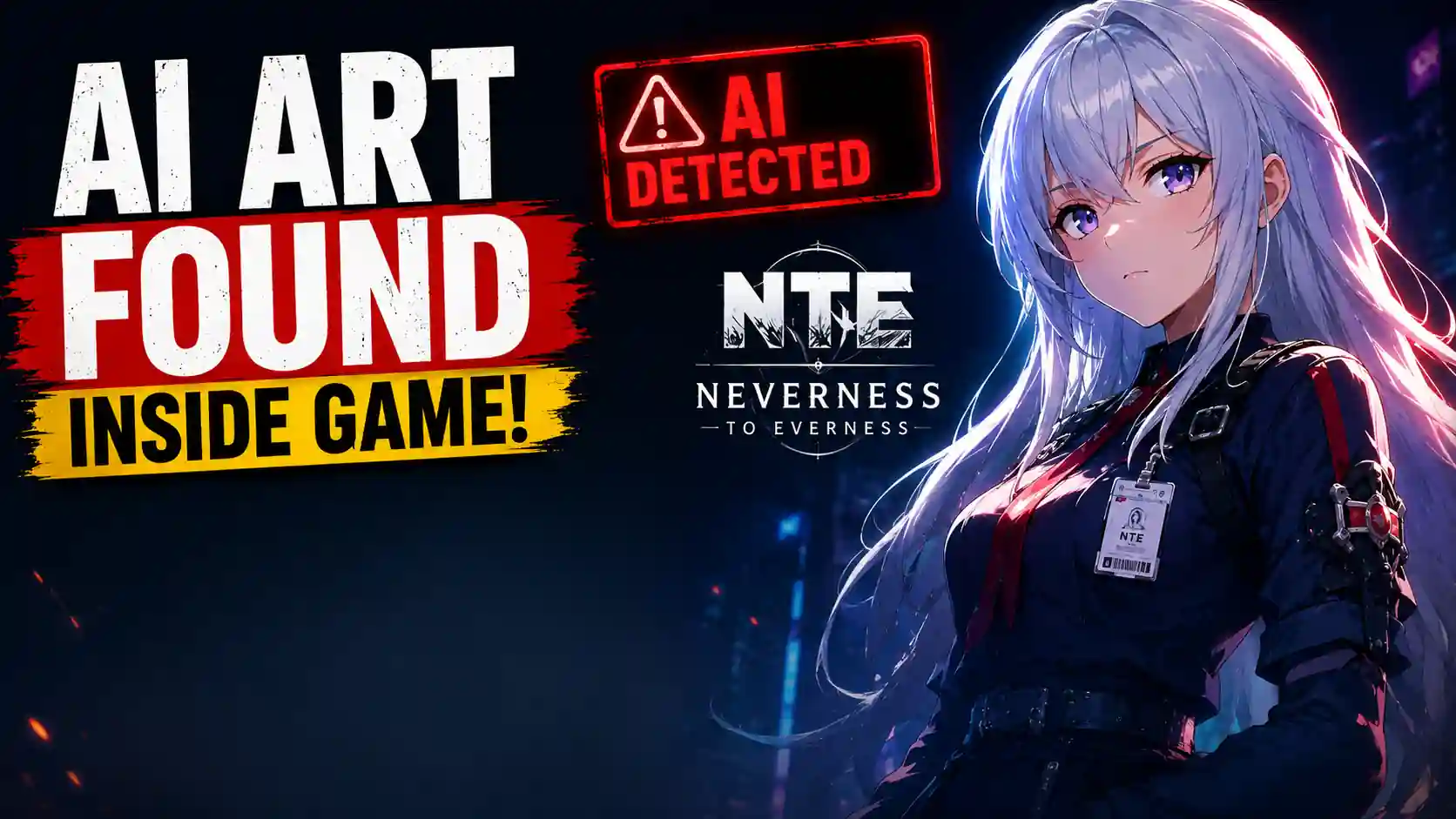
The AI Gaming Controversy surrounding Neverness To Everness just shocked the entire gaming world.
What started as a normal game promotion suddenly turned into a massive internet explosion after fans accused the developers of secretly using AI-generated assets inside the game.
Now players are angry, artists are debating online, and the developers are scrambling to fix the damage before things get even worse.
At AI Todays News, we investigated what really happened — and why this story is becoming one of the biggest AI gaming controversies of the year.
WHAT REALLY HAPPENED INSIDE THE NTE CONTROVERSY
The game at the center of this storm is Neverness to Everness, also known by fans as NTE.
The game was already gaining attention online because of its beautiful anime-style visuals, futuristic world, and strong hype inside the gaming community. Many people believed it could become one of the next huge open-world anime games.
But then something strange happened.
Fans began examining promotional animations and background assets frame by frame. Some players noticed distorted visual details, strange textures, and unusual image patterns that looked similar to AI-generated art.
That single discovery changed everything.
Within hours, screenshots spread across social media platforms. Reddit discussions exploded. YouTube creators started posting breakdown videos. Twitter users accused the developers of using AI shortcuts instead of relying fully on human artists.
The backlash became impossible to ignore.
Eventually, the developers addressed the situation publicly. They admitted that some AI-assisted tools had been used during the creation process and promised to review and rework the flagged assets moving forward.
But by that point, the internet was already on fire.
WHY THIS AI GAMING CONTROVERSY MATTERS SO MUCH
This controversy became bigger than just NTE.
The real reason people are emotionally reacting is because this situation touches one of the most sensitive topics in modern technology: human creativity versus artificial intelligence.
Many artists fear AI could slowly replace real designers, animators, and illustrators.
Gamers also worry that companies may start using AI-generated content to save time and money while reducing artistic quality. For players, games are emotional experiences. Fans want worlds created with passion, not shortcuts.
That emotional fear is exactly why the internet reacted so aggressively.
Some users defended the developers, arguing that AI tools are becoming common in creative industries. Others believed companies should clearly disclose when AI-generated content is used.
Suddenly, this became more than a gaming story.
It became a global debate about trust, creativity, and the future of digital art itself.
HOW AI-ASSET CREATION ACTUALLY WORKS
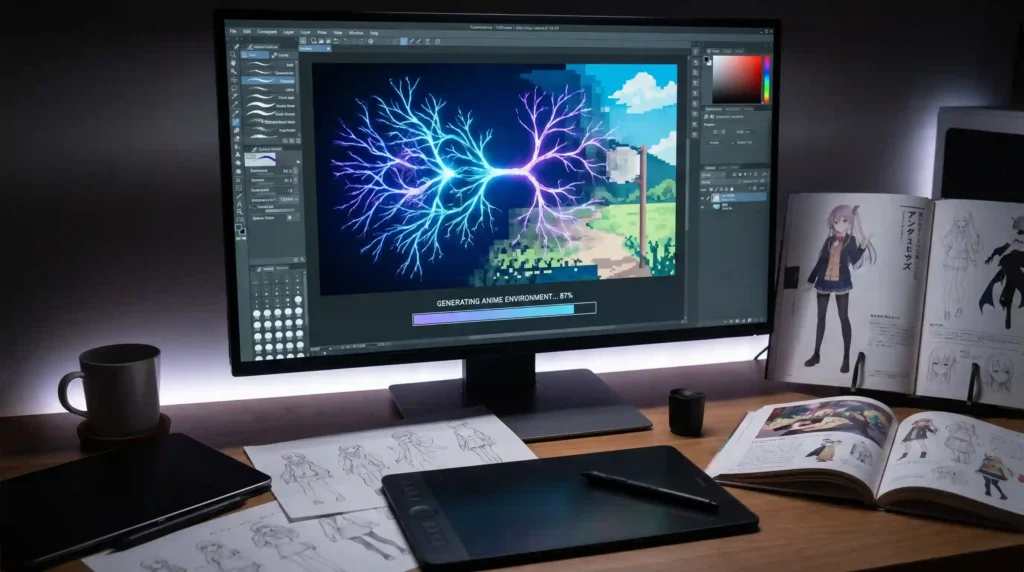
To understand why people are upset, you first need to understand how AI-generated assets work.
AI image systems are trained using massive datasets containing millions of images. Once trained, these systems can quickly generate backgrounds, textures, objects, concepts, and even animations.
For game studios, this can dramatically reduce production time.
Instead of spending days creating environment concepts manually, developers can generate ideas within minutes using AI tools.
That sounds helpful.
But the problem starts when audiences feel that companies are replacing artistic craftsmanship with automation.
Players worry games could lose originality.
Artists worry their work may have been used to train AI systems without permission.
And companies worry about public backlash damaging their reputation.
This is why the NTE controversy exploded so quickly. It touched fears that were already building across the entire entertainment industry.
THE REAL-WORLD IMPACT OF THIS CONTROVERSY
The biggest damage may not be technical.
It may be emotional.
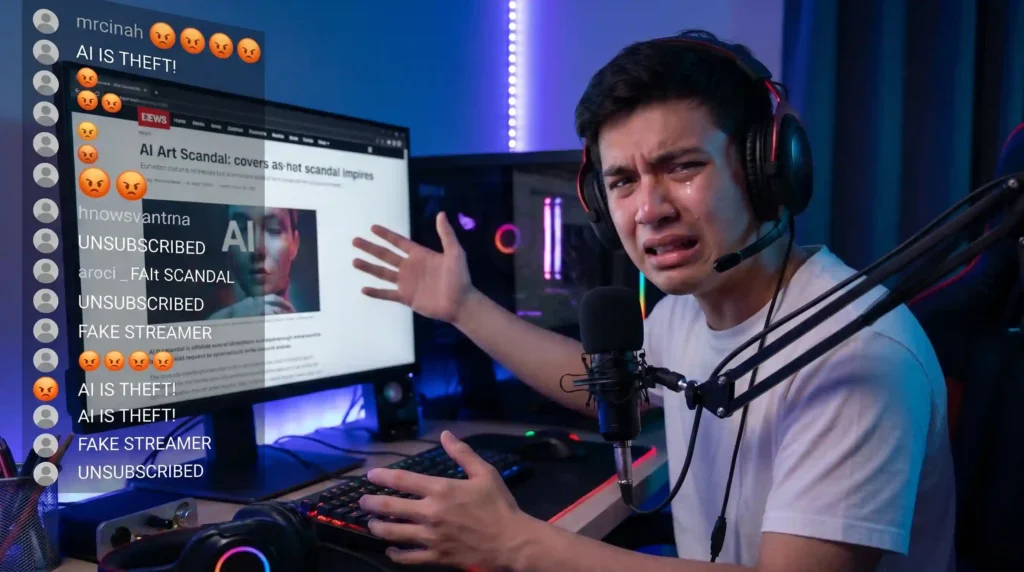
When fans support a game, they invest trust in the creators behind it. They believe artists, developers, writers, and animators are building something authentic.
The moment fans feel manipulated, the relationship changes.
Some gaming influencers already began criticizing the developers publicly. Online communities started questioning whether future trailers, art, or animations would also contain AI-generated content.
Even sponsorship relationships became part of the conversation.
This situation also sends a warning to the entire gaming industry.
Companies are now realizing that hiding AI usage can create bigger problems than openly discussing it from the beginning.
Transparency matters more than ever.
At the same time, this controversy shows that AI is no longer a future technology.
It is already deeply entering gaming, movies, advertising, music, and social media content creation.
And honestly, most people still do not fully understand how fast this transformation is happening.
WHAT HAPPENS NEXT FOR AI AND GAMING
The future after this controversy could go in two completely different directions.
One possibility is balance.
Developers may continue using AI tools only for support tasks while keeping human artists at the center of creativity. In this version, AI becomes a helper instead of a replacement.
But there is another possibility.
Studios may aggressively automate game production to reduce costs and speed up development. If that happens, audiences could begin distrusting games that feel “too artificial.”
That creates a dangerous situation for the gaming industry.
The smartest companies moving forward will likely focus on transparency. They may openly explain how AI is used instead of hiding it.
For gamers, this controversy is also a reminder to stay informed.
Technology is evolving faster than most people expected.
And the next major AI controversy may arrive much sooner than anyone thinks.
🧠 IMPORTANT LESSONS PEOPLE SHOULD LEARN
The NTE controversy teaches several important lessons:
- Companies should be honest about AI usage.
- Audiences care deeply about authenticity.
- Human creativity still matters emotionally.
- AI tools can help creators, but trust must come first.
- Hiding technology decisions often creates bigger backlash later.
For gamers and creators alike, the safest approach is staying informed instead of blindly trusting online hype.
Because the future of entertainment is changing right now in real time.
✅ KEY TAKEAWAYS
- Neverness To Everness is facing major AI backlash.
- Fans discovered suspicious AI-style assets online.
- Developers admitted some AI-assisted tools were used.
- Social media reactions exploded rapidly.
- Artists fear AI replacing creative jobs.
- Gamers want transparency from studios.
- AI tools are entering gaming faster than expected.
- Trust is becoming the biggest issue in entertainment.
- Companies hiding AI usage risk damaging reputation.
- The future of gaming may permanently change after controversies like this.
.
🚀 ENDING + CTA
The Neverness To Everness controversy may look like just another gaming drama on the surface.
But underneath the internet chaos is a much bigger question the entire world is starting to ask:
How much AI is too much AI?
Gaming is changing. Creativity is changing. And the relationship between technology and human art is entering dangerous new territory faster than anyone expected.
One thing is certain — this conversation is only getting started.
“What do YOU think about AI Gaming Controversy?
This is the kind of news that changes everything —
and we want to hear your thoughts.
Drop your opinion in the comments below.
Share this post with one person who needs to read this.
And if you want to stay ahead of the AI revolution
every single day — follow AI TODAYS NEWS right now.
The future is moving fast. Don’t get left behind.”