

Table of Contents ( AI Commencement Speech Shock )
INTRO
Something unexpected just happened at a university graduation ceremony — and the internet cannot stop talking about it.
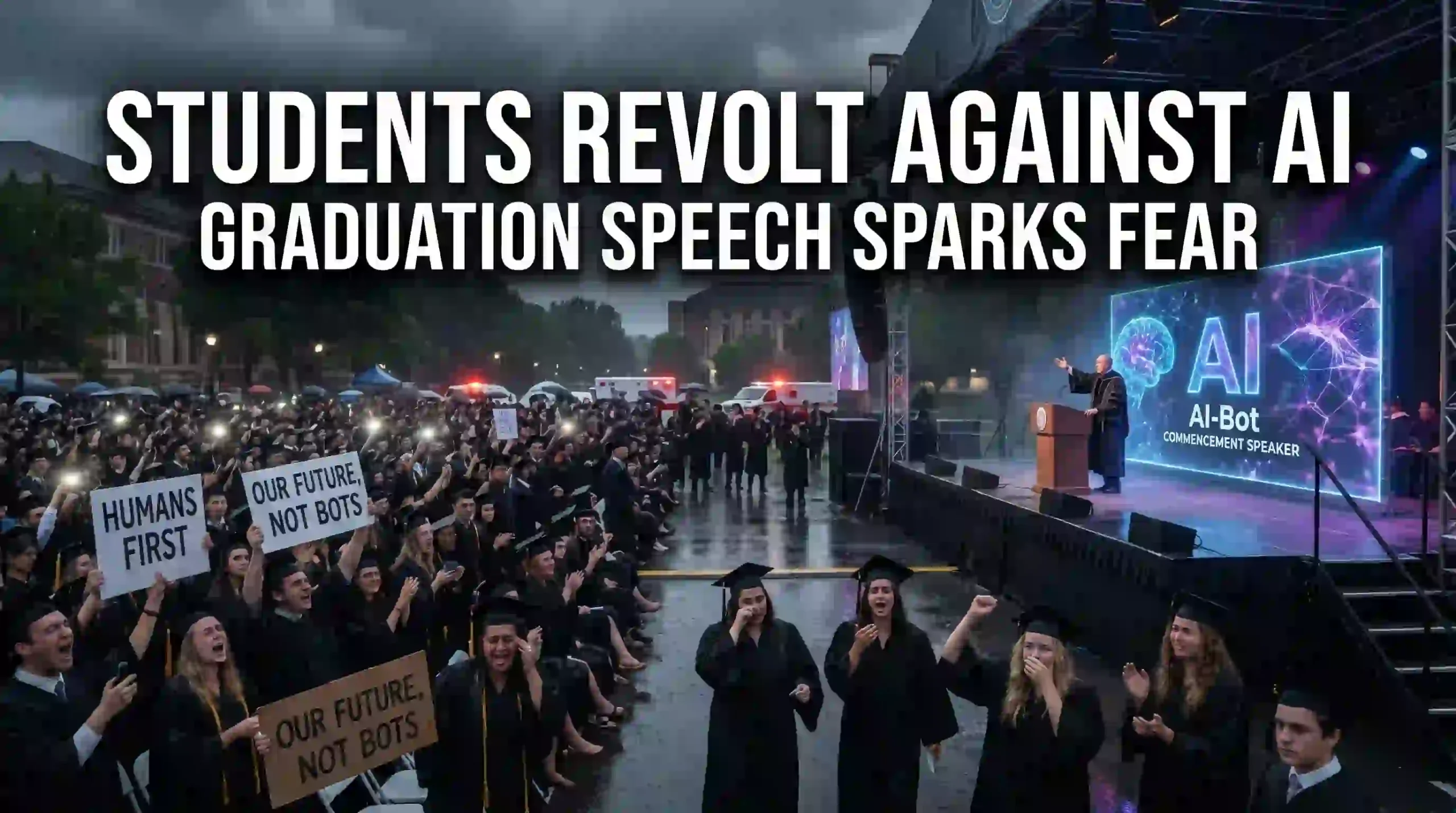
An “AI Commencement Speech” moment at the University of Central Florida has suddenly become one of the most discussed AI controversies online after students openly reacted against artificial intelligence during their own graduation event.
At AI Todays News, we have been tracking growing public fear around AI for months. But this moment felt different. It was emotional, public, and impossible to ignore.
Because for the first time, frustration about AI job fears exploded live in front of thousands of people.
And honestly, the reaction shocked even tech communities.
WHAT REALLY HAPPENED DURING THE AI COMMENCEMENT SPEECH?
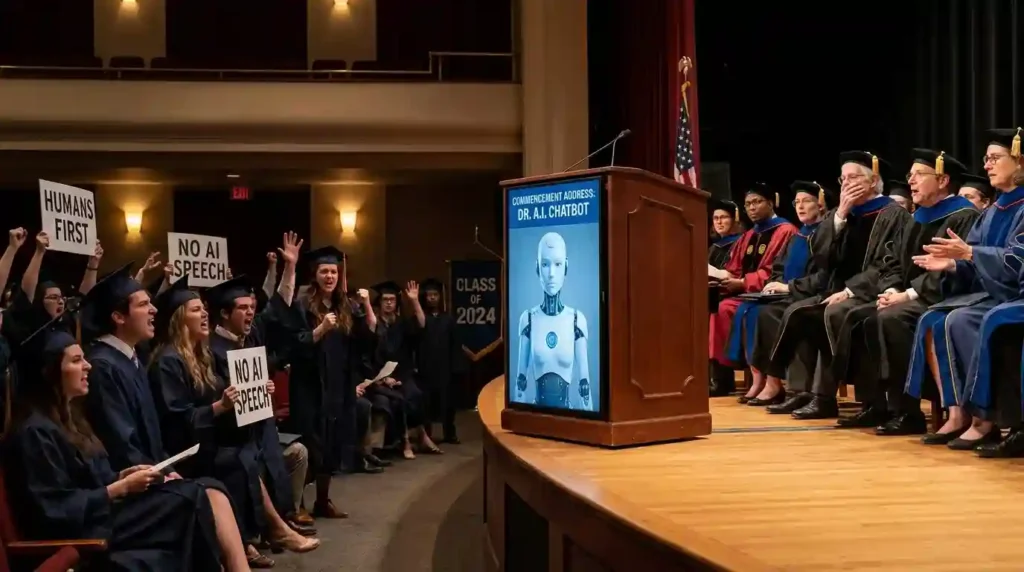
The controversy began during a commencement ceremony at the University of Central Florida on May 8, 2026, but what happened there quickly became much bigger than a normal graduation moment. The ceremony included students from arts, humanities, communication, and creative media programs — industries that are already facing growing fear and uncertainty because of artificial intelligence. For many graduates sitting inside that auditorium, the future no longer feels stable. AI tools are already changing writing, graphic design, video editing, marketing, journalism, and other creative professions at a speed that many young people never expected to witness this early in their careers.
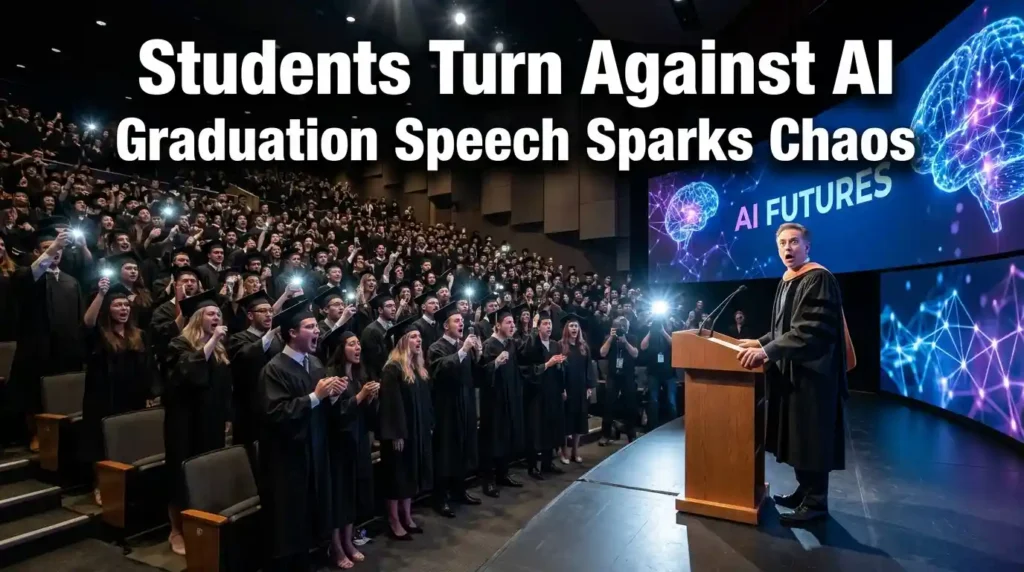
At first, the atmosphere during the ceremony felt emotional and celebratory. Families were cheering, students were excited, and graduates were preparing to enter the next chapter of their lives. But the mood inside the auditorium shifted almost instantly when executive speaker Gloria Caulfield began discussing artificial intelligence during her speech. While speaking to the graduates, she described AI as “the next Industrial Revolution,” a statement that immediately triggered strong reactions from many students in the audience.
Within seconds, loud boos reportedly began spreading across the auditorium.
Some students openly shouted phrases like “AI sucks!” while others reacted with frustration, anger, and disappointment during the speech itself. Videos captured from inside the ceremony quickly spread across platforms like X, Reddit, TikTok, and AI discussion communities, where millions of people began debating what the moment actually represented. What could have remained a small graduation controversy suddenly turned into a viral internet discussion about fear, technology, jobs, and the future of human creativity.
But what made this moment feel so powerful was not simply the public reaction.
It was the emotion behind it.
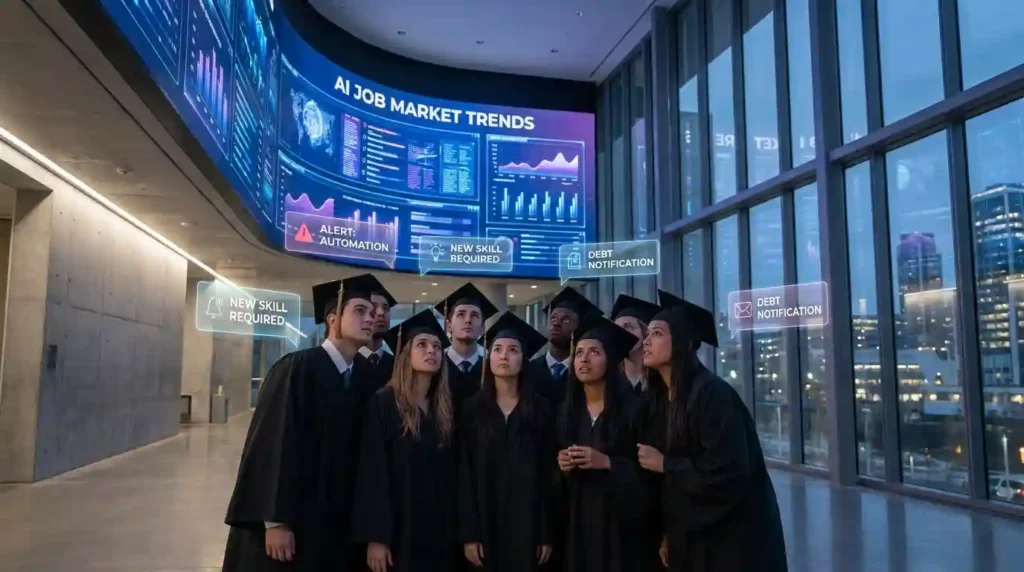
Many of the graduates listening to that speech are preparing to enter industries already being disrupted by automation and AI systems. Some students are watching companies replace human tasks with AI-generated content, automated design tools, and machine-driven workflows. Others are seeing layoffs, shrinking opportunities, and increasing competition in creative industries that once seemed secure. For those students, hearing AI described as a revolutionary breakthrough did not sound inspiring or hopeful.
It sounded threatening.
Many people online believe the students were not rejecting technology itself. Instead, they were reacting emotionally to the growing fear that AI may eventually reduce the value of human creativity, artistic skill, and years of education. Some graduates likely felt that their concerns about job security and career stability were being ignored at one of the most important moments of their lives.
That emotional clash is exactly why the internet reacted so strongly.
Supporters of artificial intelligence argued that every major technological revolution in history created fear before eventually creating new opportunities and industries. Others believed the students’ reaction represented something deeper — a warning sign that young people are becoming increasingly anxious about how rapidly AI is transforming society, especially in creative and communication-based careers.
What happened during the UCF commencement speech is now being viewed by many people as more than just a viral graduation clip.
It has become a symbol of the growing tension between rapid AI advancement and the human fear of becoming replaceable in an AI-driven future.
And honestly, that may be why this story spread across the internet so quickly.
For the first time, millions of people watched young graduates publicly push back against artificial intelligence during one of the biggest milestones of their lives. It showed the world that the AI debate is no longer happening only inside tech companies, research labs, or business meetings anymore.
It is becoming emotional.
It is becoming personal.
And it is starting to shape how an entire generation sees its future.
WHY THIS MOMENT BECAME MUCH BIGGER THAN A UNIVERSITY EVENT
At first, the entire situation looked like nothing more than a normal graduation controversy. A speaker praised artificial intelligence during a university commencement ceremony, students reacted negatively, and videos from the event spread online. Moments like this happen on the internet all the time. But this situation became different very quickly because people realized the reaction inside that auditorium reflected something much bigger happening across society right now.
Within hours, social media users, students, creators, and even technology communities started treating the moment as a symbol of the growing tension between artificial intelligence and human careers. What happened at the University of Central Florida no longer felt like a simple disagreement during a speech. It started feeling like a public emotional response to fears that millions of people have quietly been carrying for years.
For a long time, artificial intelligence was mostly discussed as exciting future technology. Tech companies described AI as something that would improve productivity, create smarter systems, help businesses grow faster, and make life easier for humanity. Many people viewed AI as innovation, convenience, and progress. But now, especially among younger generations, the conversation is beginning to change.
Students are starting to ask a much more personal question.
“What happens to human jobs if AI keeps improving this fast?”
That fear is growing especially strongly inside creative industries.
Writers, graphic designers, video editors, musicians, filmmakers, photographers, media creators, journalists, and communication graduates are now watching AI tools perform tasks that once required years of practice, talent, and education. AI systems can already generate articles, create realistic images, edit videos, clone human voices, produce music, and automate marketing content within seconds. And every few months, these systems become even more powerful.
Because of this rapid shift, many young people no longer see artificial intelligence as just another exciting piece of technology.
They see uncertainty.
Some students fear their careers could become unstable before they even begin. Others worry that companies may eventually choose cheaper AI automation instead of hiring real human talent. Many graduates also feel frustrated because technology appears to be evolving much faster than schools, governments, and job markets can realistically adapt to.
That emotional pressure has been quietly building for years.
The graduation ceremony simply became the moment where those feelings finally exploded publicly in front of the world.
And honestly, that is why the internet reacted so strongly.
People watching the videos did not only see students booing a speaker. They saw fear, frustration, anxiety, and uncertainty about the future. Many viewers related to those emotions immediately because the same questions are now spreading across industries everywhere. Workers are wondering whether AI could eventually replace parts of their jobs. Students are questioning whether the careers they studied for will still exist in the same way a few years from now.
Even people who support AI development admitted that the moment revealed something important.
The debate around artificial intelligence is no longer only about technology anymore.
It is now about identity.
It is about job security.
It is about creativity.
And for many people, it is becoming deeply emotional and personal.
That is exactly why this university moment became much bigger than a simple graduation controversy.
It exposed the growing fear that society may not be fully prepared for how quickly artificial intelligence is starting to reshape the human future.
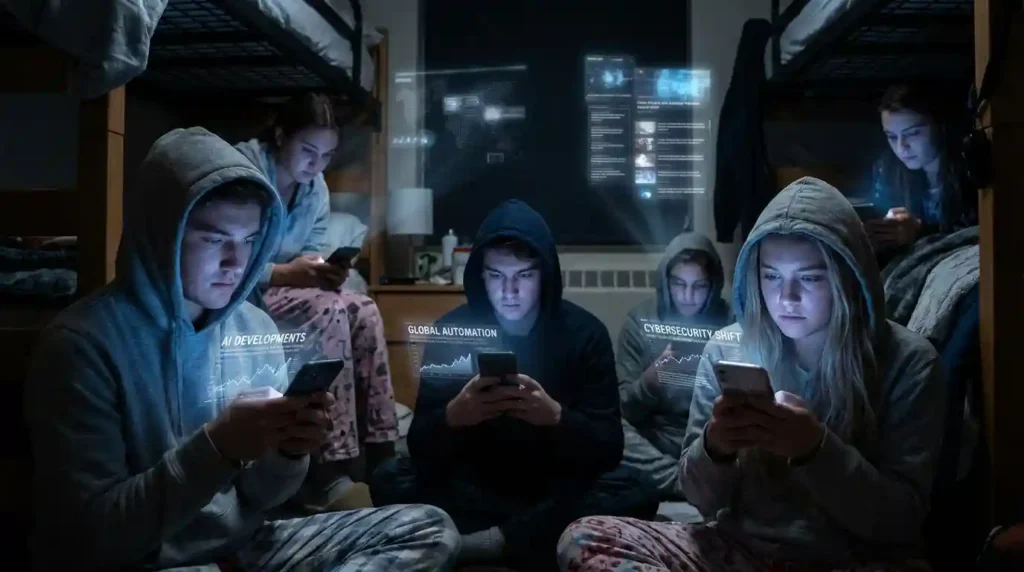
HOW AI FEAR IS CHANGING YOUNG GENERATIONS
One of the most important parts of this story is psychological.
Young people today are growing up during one of the fastest technological shifts in modern history. Unlike previous generations, they are watching artificial intelligence evolve in real time while trying to build careers for the future.
That creates enormous pressure.
Students now constantly hear headlines about AI replacing jobs, automating industries, disrupting businesses, and changing the global economy. Every month brings new AI tools capable of doing work that once seemed impossible for machines.
Naturally, this creates fear.
And not just economic fear.
Identity fear.
Many young graduates spent years studying creative skills, communication, storytelling, media production, writing, or design. Now they are seeing AI systems perform versions of those same tasks within seconds.
For some students, it feels less like technological progress and more like competition arriving before their careers even started.
Experts say this emotional reaction is becoming increasingly common worldwide. The debate around AI is no longer only about technology itself. It is now about human value, purpose, creativity, and future survival inside rapidly changing industries.
That is exactly why the UCF moment resonated with so many people online.
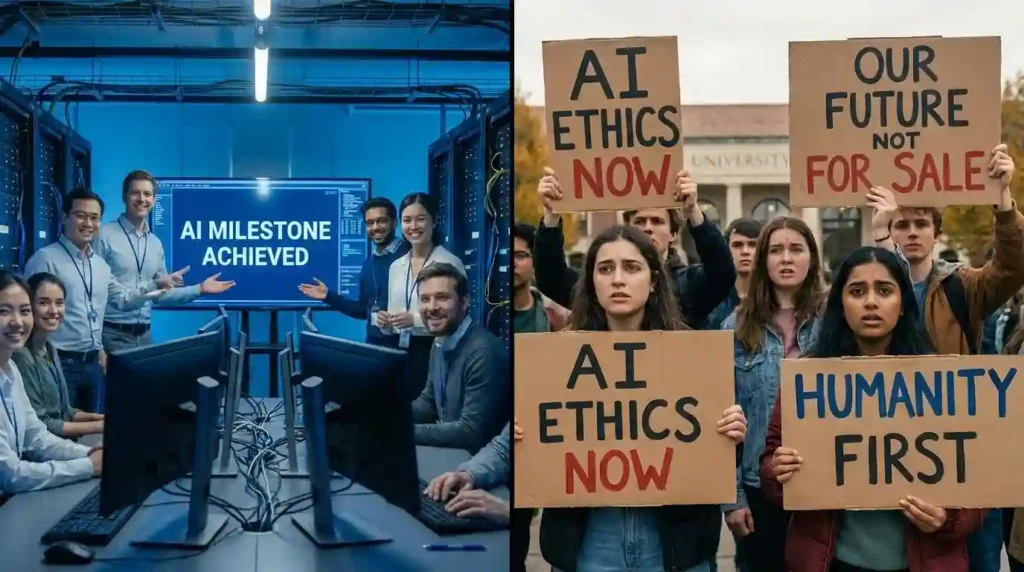
THE GLOBAL AI DIVIDE IS NOW BECOMING VISIBLE
The AI industry itself remains extremely optimistic.
Companies like OpenAI, Google, Microsoft, and NVIDIA continue investing billions into advanced artificial intelligence systems. Investors, executives, and researchers often describe AI as the future of productivity and global innovation.
But ordinary people are not always reacting with excitement anymore.
Many workers now fear job disruption.
Parents worry about education.
Artists worry about creativity.
Students worry about survival.
And governments worry about regulation.
This is creating a growing divide between technological optimism and public anxiety.
The UCF commencement moment exposed that divide publicly in a way millions of people could immediately understand. A speaker praised AI as the future. Students responded with visible frustration and fear.
That emotional collision became the real story.
Because deep down, society is still trying to answer one massive question:
Will AI improve human life — or destabilize it faster than people can adapt?
Right now, nobody truly knows.
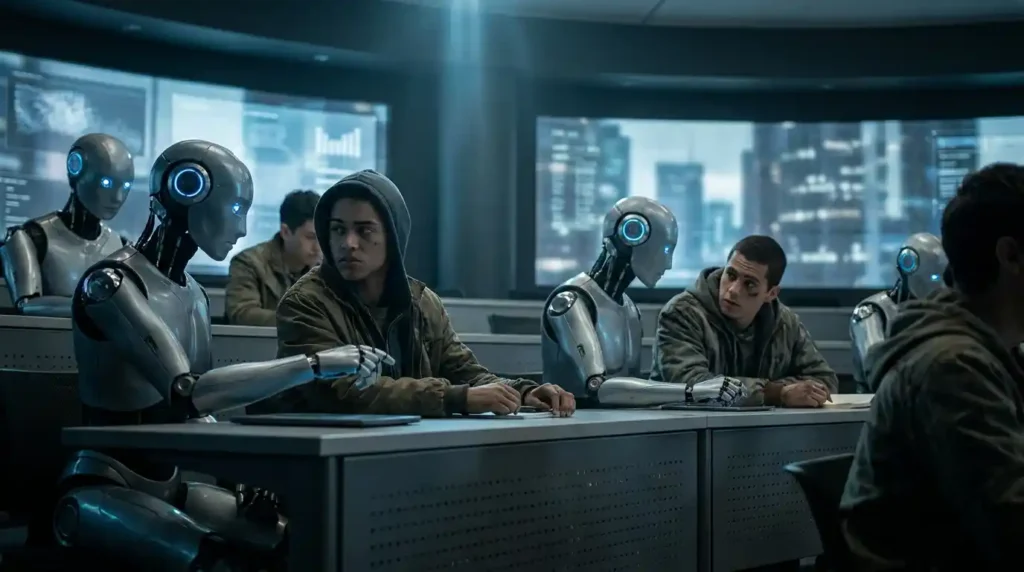
WHAT HAPPENS NEXT MAY MATTER EVEN MORE
Experts believe moments like this may become more common over the next few years.
As AI systems continue entering workplaces, schools, creative industries, healthcare, research, and business operations, public reactions will likely become stronger and more emotional.
Some people will embrace AI completely.
Others will resist it aggressively.
And many will feel trapped somewhere in between.
What makes this situation especially complicated is that AI is not slowing down. Every major tech company is racing to release more advanced systems faster than competitors. Governments are struggling to create laws quickly enough to control the speed of innovation.
Meanwhile, ordinary people are simply trying to understand what their future will look like.
That is why the UCF graduation controversy matters far beyond one speech.
It revealed something deeper happening globally:
Humanity is emotionally struggling to adapt to the AI era in real time.
And this tension may only grow stronger from here.
VALUE ADD — IMPORTANT INSIGHTS PEOPLE SHOULD UNDERSTAND
- AI fear is becoming emotional, not just technical
- Students are worried about long-term career stability
- Creative industries are feeling pressure first
- Public backlash against AI may increase globally
- Governments may soon face pressure for stronger AI regulations
- Learning AI skills may become necessary for future careers
- Human creativity and critical thinking still matter deeply
- Blind dependence on AI could create long-term risks
- Understanding technology is becoming more important than avoiding it
- Society is entering one of the biggest workforce transitions in modern history
KEY TAKEAWAYS
- AI backlash is becoming publicly visible
- Students openly reacted against AI during graduation
- The event happened at UCF on May 8, 2026
- AI job fears are growing among young graduates
- Creative industries feel especially vulnerable
- Social media helped the controversy spread rapidly
- The debate around AI is becoming emotional worldwide
- Tech optimism and public fear are now colliding openly
- AI regulation discussions may increase globally
- This may only be the beginning of larger AI resistance movements
ENDING
What happened at this graduation ceremony was much bigger than a few students reacting emotionally during a speech.
It revealed a growing tension that is spreading quietly across the world.
Artificial intelligence is advancing rapidly, but human society is still trying to emotionally process what this technological revolution may actually mean for jobs, creativity, identity, and the future itself.
And moments like this are showing that the AI debate is no longer staying inside research labs or tech conferences anymore.
It is now becoming personal.
What do YOU think about AI Commencement Speech controversy?
This is the kind of news that changes everything —
and we want to hear your thoughts.
Drop your opinion in the comments below.
Share this post with one person who needs to read this.
And if you want to stay ahead of the AI revolution
every single day — follow AI TODAYS NEWS right now.
The future is moving fast. Don’t get left behind.