

Table of Contents ( AI Trump-Xi Summit )
INTRO
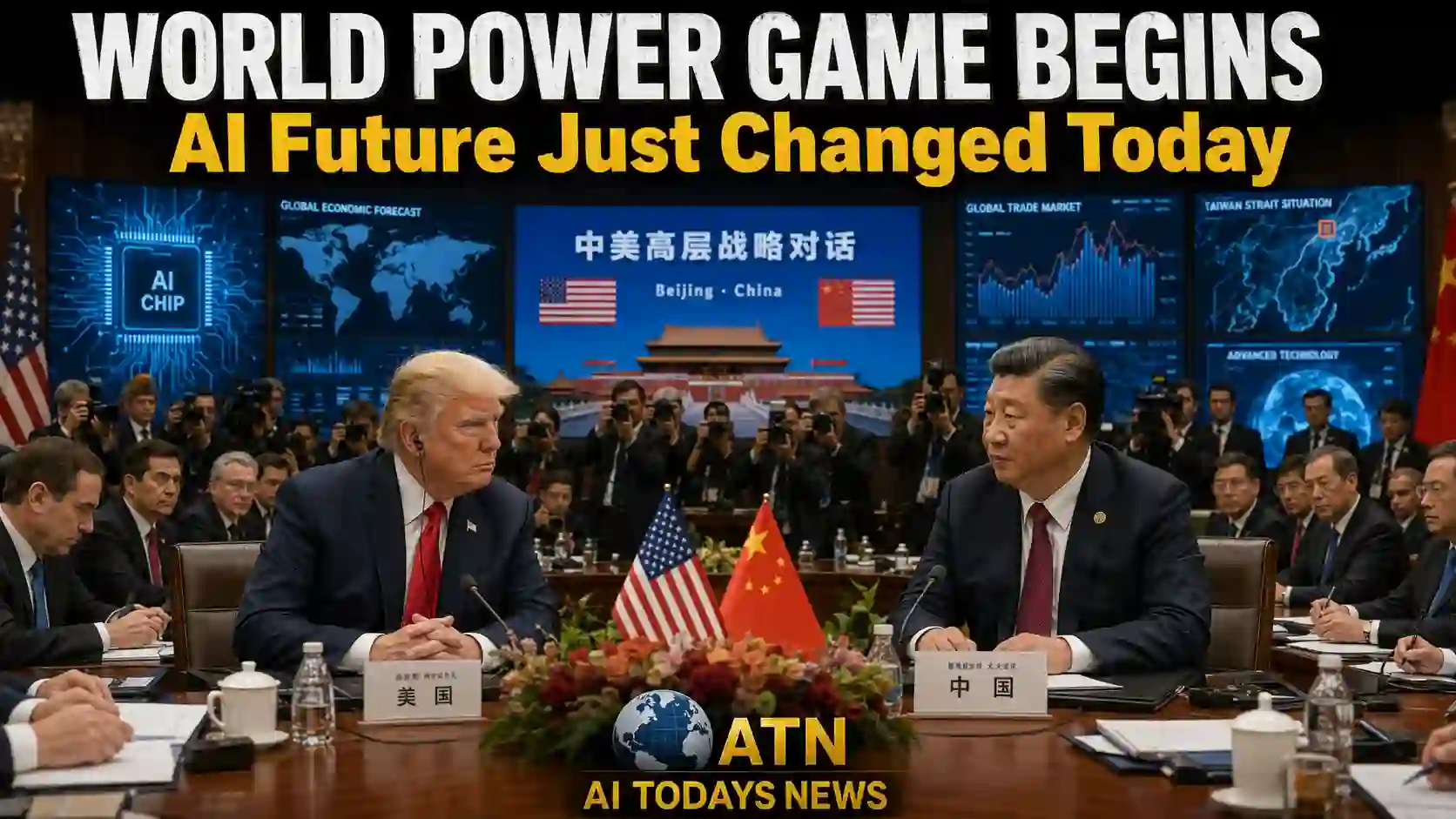
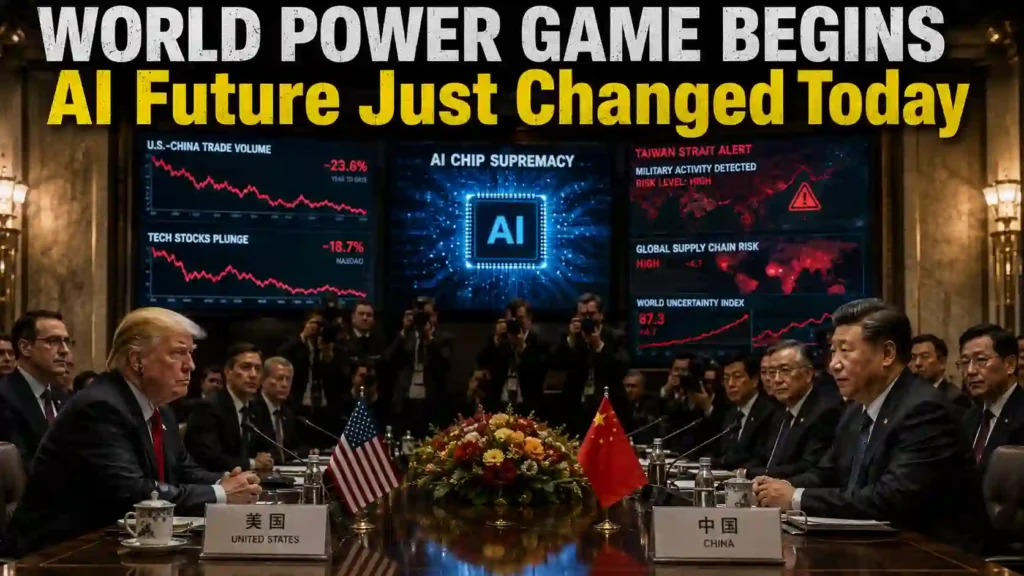
Something big just happened, and most people still don’t realize how important it really is. At first, it might look like just another meeting between world leaders, but the truth is much deeper than that. The Trump-Xi Summit in Beijing is not only about politics or formal handshakes in front of cameras. Behind closed doors, serious discussions are taking place that could influence global trade, Artificial Intelligence, technology, and even the balance of power in the world.
At AI Todays News, we focus on moments like these because history doesn’t always announce itself loudly. Big changes often happen quietly, in meetings like this, before the world fully understands what is going on. What happened in Beijing is not just two leaders talking — it could affect global markets, future technologies, business decisions, and how AI develops in the coming years. This might be one of those rare moments that people look back on and realize: this is where everything started to shift.
What Happened At The AI Trump-Xi Summit?
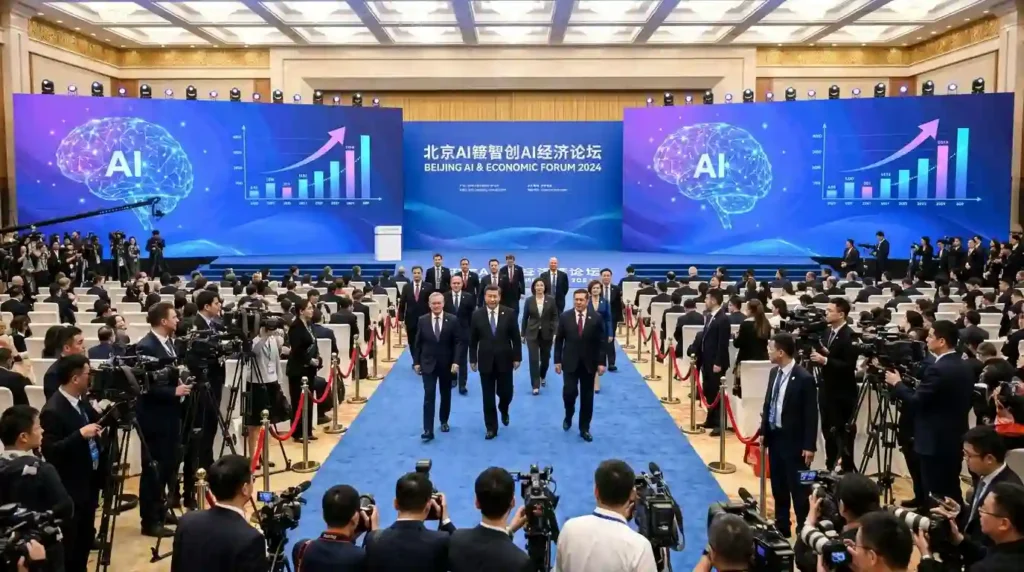
Donald Trump recently arrived in Beijing for an important two-day summit with Chinese President Xi Jinping. On the surface, it appeared like a normal diplomatic visit with formal meetings, photos, and discussions between two world leaders.
But behind the cameras and public appearances, the real situation was far more serious and meaningful.
This was not just a simple meeting between two presidents. It was a discussion between the two largest economic powers in the world, where decisions and conversations can directly influence global markets, international business, and future technology direction.
One of the main focus areas of the meeting was ongoing trade tensions between the United States and China. For many years, both countries have struggled with issues like tariffs, restrictions on technology, and control over economic influence. During this summit, Trump pushed for more balanced and fair trade relationships, where both sides benefit equally instead of one-sided advantages.
However, as the discussions continued, another powerful topic became central to the conversation — Artificial Intelligence.
And at that moment, the nature of the meeting changed completely. It was no longer just about trade or politics. It became a conversation about the future of technology, global innovation, and who will lead the next era of artificial intelligence development worldwide.
Why The AI Conversation Changed Everything
For a long time, Artificial Intelligence was seen as something only used by tech companies, software developers, and digital products. Most people believed AI was just about apps, automation tools, or smart systems that make everyday technology easier to use. But that way of thinking has now completely changed.
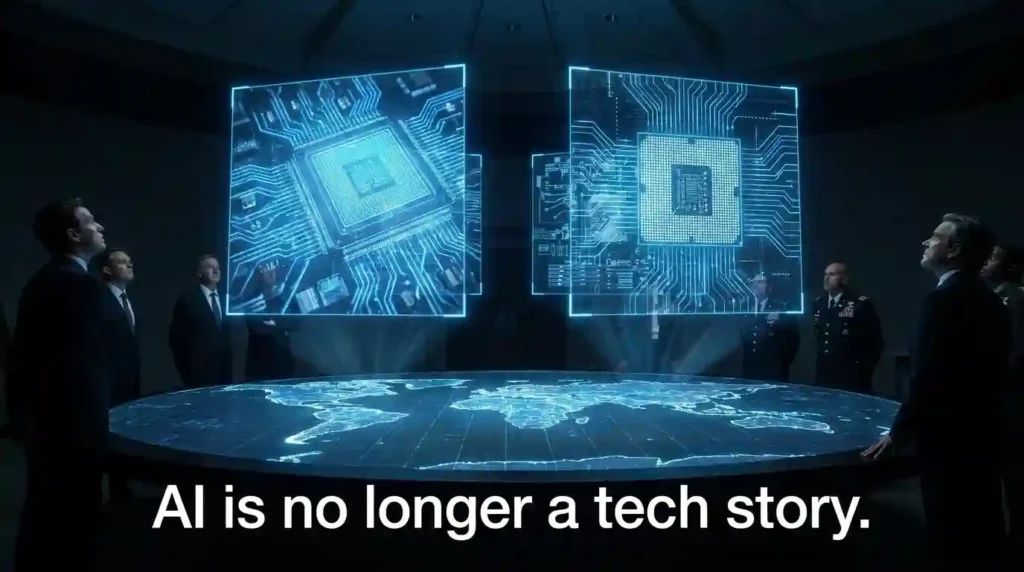
Today, AI is no longer just a topic of technology — it has become a part of national strategy. Countries across the world are now actively competing to build stronger AI systems, faster computing power, advanced semiconductor chips, and secure digital infrastructure that can support the next generation of industries.
The focus has also shifted far beyond just software. It now includes powerful hardware systems, massive data networks, military intelligence applications, and large-scale automation that can reshape entire economies and industries.
The simple truth is this — whichever country leads in Artificial Intelligence will gain a huge advantage in almost every major field, including economic growth, national security, healthcare innovation, scientific research, and industrial development.
This shift has completely changed how technology is understood today.
AI is no longer just about mobile apps, chatbots, or virtual assistants. It has become a symbol of influence, control, and future power in the modern world.
Global leaders fully understand this reality. That is exactly why meetings like the Trump-Xi Summit are no longer treated as ordinary diplomatic events. They are now seen as high-level strategic discussions about who will lead the future of global technology and power.
This is also the reason why the world is paying so much attention to it. People are slowly realizing that what appears as simple politics on the surface is actually something much deeper and more important underneath.
It is no longer just diplomacy.
It has become a global competition to shape the future of the world.
How This Global AI Competition Really Works
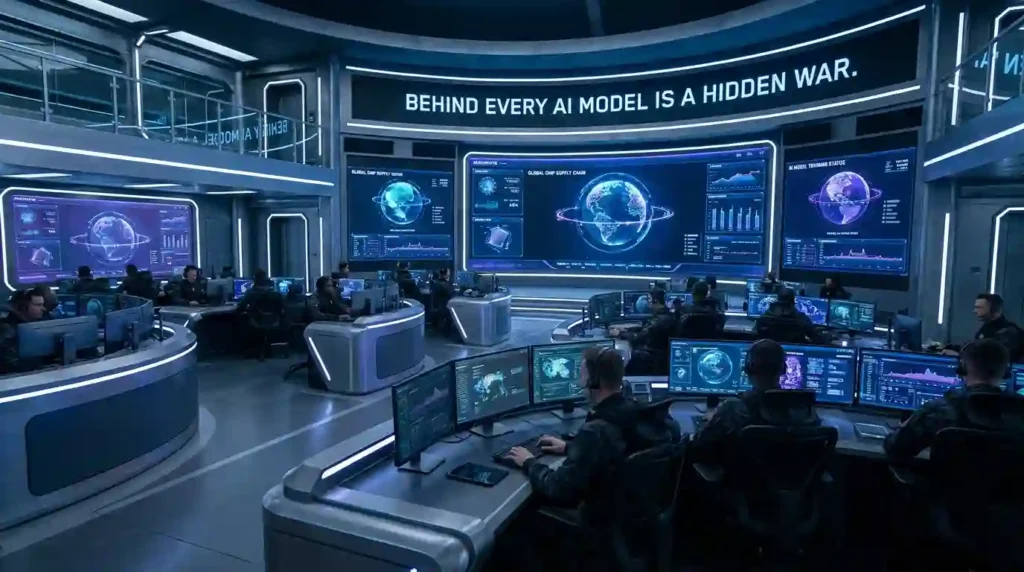
A lot of people still think Artificial Intelligence works like magic — as if it suddenly appears out of nowhere and starts making decisions or generating results on its own. But in reality, that is not how it works at all.
AI is built on a very strong and complex foundation. It depends on massive infrastructure that includes powerful computing systems, advanced processors, large-scale data centers, continuous research, and billions of dollars in investment to keep everything running and improving.
Countries around the world are now competing to secure access to the most advanced AI technologies because they understand one simple truth — whoever controls the foundation of AI will eventually have control over the future of technology itself.
At the center of this entire system are specialized chips designed specifically for AI processing. These chips are extremely powerful and difficult to produce, which is why chip manufacturing has now become one of the most important and competitive industries in the world.
This is also the reason why political discussions today are no longer limited to traditional topics like trade or diplomacy. Technology has become a core part of global decision-making, and leaders are now deeply focused on securing technological advantage.
In the past, global conversations were simple — who builds better software or who has better digital services. But today, the conversation has completely shifted.
It is no longer just about software or innovation.
Now the real question is — who will control tomorrow?
The Real-World Impact Most People Are Ignoring
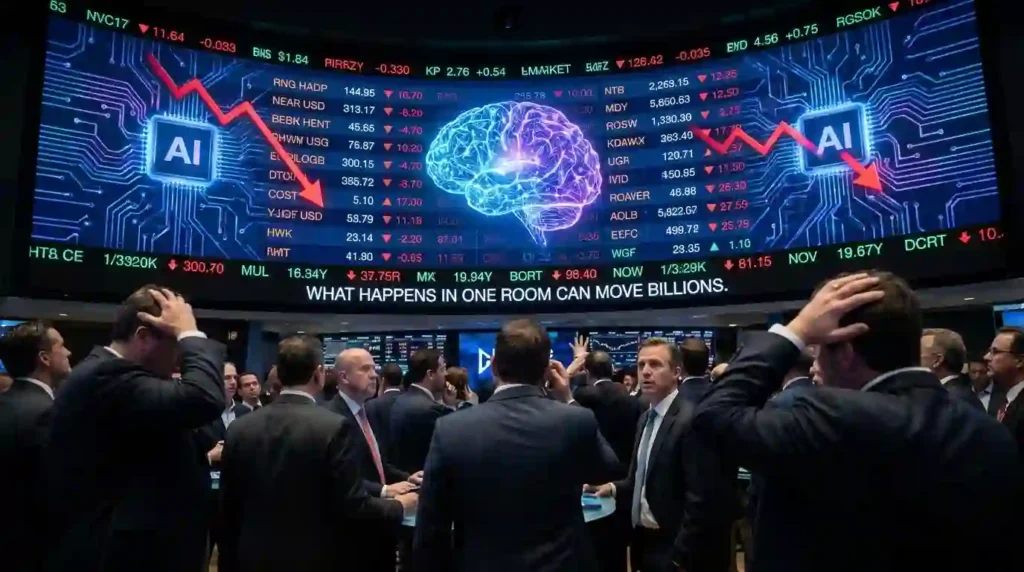
Many people look at international meetings like this and immediately think that it has nothing to do with their daily life. It feels distant, something happening between governments and leaders that doesn’t really connect to ordinary people. But the reality is very different.
These decisions and discussions do affect everyday life, even if the impact is not visible right away.
Trade agreements between countries can slowly change the prices of products people buy every day. Technology restrictions can directly affect how businesses operate, what tools they can use, and how fast they can grow.
The competition in Artificial Intelligence also plays a big role in shaping future jobs, entire industries, and global investment trends. What happens at the top level eventually flows down into the job market and business environment.
Even simple things like smartphone prices, computer availability, software tools, and the growth of tech startups can all be influenced by these global decisions.
When powerful countries compete on such a large scale, the effects don’t stay limited to governments alone. They slowly reach businesses, workers, and everyday people around the world.
This summit was not just about politics or diplomacy. It was also about the future of markets, global trust, innovation, and the opportunities that will shape the next generation.
The world today is deeply connected. Everything is linked in ways most people don’t notice.
That is why even a single decision made in a high-level meeting can create a chain reaction that spreads across industries and affects people everywhere.
What Happens Next?
The biggest question everyone is asking right now is very simple — what happens next after this summit?
No one has a fully clear answer yet, but experts and analysts believe that future discussions will likely move toward much deeper topics like global technology cooperation, AI regulations, access to advanced semiconductor chips, and long-term international strategies that can shape the coming decade.
At the same time, some major global issues are still not settled. Taiwan continues to remain a sensitive and important point in international relations. Trade between major economies is still fragile, and even small changes can have big effects on global markets.
Meanwhile, the competition in Artificial Intelligence is not slowing down — in fact, it is growing faster every day. Countries are investing heavily in AI research, infrastructure, and talent because they understand how important this technology has become for future power and development.
One thing is becoming very clear through all of this.
Technology and politics are no longer separate worlds. They are now deeply connected, and decisions in one area directly influence the other.
In the coming years, the global economy may increasingly revolve around Artificial Intelligence, data systems, and digital innovation. Countries already know this, and that is why they are preparing so seriously for what lies ahead.
We might be standing at the very beginning of a much bigger global shift — a story that is still unfolding step by step.
And this may not be the end of anything…
It may just be the start of everything.
VALUE ADD: What Readers Should Learn
There are a few important lessons hidden inside this entire story that most people often overlook in their daily life.
First, it is important to pay attention to global technology trends, not just new product launches or updates from big companies. The real changes that shape the future usually happen at a much higher level, where countries and industries are making long-term decisions.
Second, people should not assume that Artificial Intelligence only affects tech companies. In reality, AI is already influencing many different sectors, including education, healthcare, finance, transportation, and even government systems.
Third, it is important to understand that political decisions today are increasingly connected with innovation and technology. What leaders decide in global meetings can directly impact how fast new technologies develop and how they are used around the world.
Because of this, staying informed about AI regulations, international technology competition, and global agreements is becoming more important than ever before.
In the future, career opportunities, business growth, and even job security may depend on how early someone understands these changes and adapts to them.
The truth is simple — the people who notice these shifts early are often the ones who stay ahead while others are still trying to understand what changed.
KEY TAKEAWAYS
Here are the most important points to understand from this entire story, explained in a simple and clear way:
• Artificial Intelligence is no longer just a technology topic — it has now become a major part of global politics and international relations.
• Trade and advanced technology are now closely connected, and decisions in one area directly impact the other.
• The global competition to lead in Artificial Intelligence is increasing very fast between major world powers.
• AI chips and semiconductor technology are now considered highly valuable strategic resources for countries.
• Modern international meetings between world leaders now often include deep discussions about AI and future technology.
• Technology is no longer separate from power — it now plays a direct role in shaping global influence and control.
• Political decisions made at the highest level can significantly affect innovation, research, and technological progress.
• Financial markets around the world quickly react to political tension and global uncertainty.
• Future job opportunities and entire industries may be heavily influenced by advancements in Artificial Intelligence.
• Staying updated and informed about global AI developments can create long-term advantages in career, business, and decision-making.
ENDING
Moments like this don’t always feel important when they are happening. At first, it may look like just another news story about world leaders that people quickly move past.
But many times in history, people only realize later that they were actually watching a major shift in real time.
Maybe this summit will be remembered as a normal meeting, or maybe it will be seen as the moment when the AI power race really started to accelerate.
Right now, nothing is fully clear — only time will show its real impact.
But one question still remains:
What do YOU think about the Trump-Xi Summit?
Share your thoughts in the comments, and tell someone who should understand this story.
And if you want daily updates on the AI world, follow AI TODAYS NEWS.
The future is moving fast — stay ahead of it.