

Table of Contents
✅ INTRO
The AI world just had its most dramatic day of 2026 — and most people have no idea what happened. AI Todays News is breaking it down before anyone else does. Sora, OpenAI’s once-celebrated video AI, has quietly hit a wall that nobody saw coming. At the exact same time, a $2.75 billion bet on pharma AI just landed — and multi-model AI research is rewriting the rules of how machines think. This is not just tech news. This is the beginning of a brand new chapter. Read every word.

Sora’s Collapse — What Really Happened to OpenAI’s Star AI
Sora was supposed to be OpenAI’s crown jewel. When it launched, the world gasped. It could generate realistic videos from a simple text prompt — something nobody had seen at that quality before. Tech journalists called it revolutionary. Investors called it a game-changer. The internet called it magic.
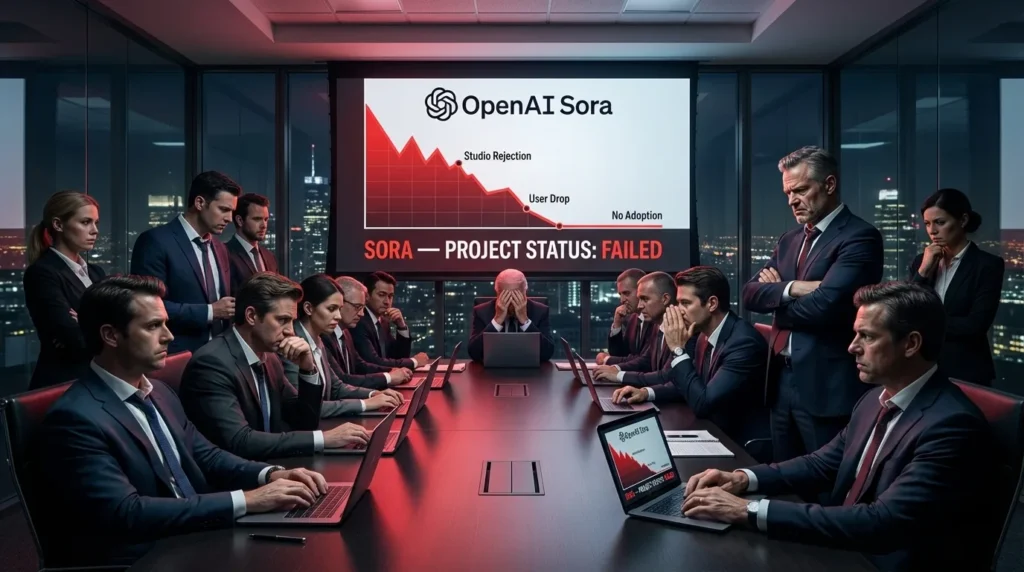
But magic has an expiration date. By early 2026, the cracks started showing. Sora struggled with consistency, physics accuracy, and most critically — commercial adoption. Major studios tested it and quietly walked away. Content creators found it impressive but impractical. The product that was supposed to disrupt Hollywood found itself stuck in a loop it could not escape.
The “autopsy” being discussed across AI communities right now is not just about Sora failing. It is about what Sora’s failure reveals — that generative video AI is far harder to get right than generative text or images. The gap between “wow that looks cool in a demo” and “this actually works in real production” turned out to be enormous.
OpenAI has not officially buried Sora. But the silence around it speaks louder than any press release. When a company stops talking about a product, that product is already on life support. The AI community is now asking the question nobody wants to answer — was Sora always more hype than substance?
Why Sora’s Failure Matters More Than You Think Right Now
This is not just about one product failing. Sora’s stumble sends a signal across the entire AI industry that product announcements are not the same as product delivery. For years, the AI world has operated on hype cycles — announce something breathtaking, raise billions, figure out the hard part later. Sora exposed that playbook.
For investors, this is a wake-up call. Billions have been poured into generative AI companies based on demo videos and potential. If OpenAI — the most funded, most celebrated AI company on the planet — cannot turn a groundbreaking demo into a dominant product, what does that say about the hundreds of smaller companies making the same promises?
For developers and creators, Sora’s struggle actually creates opportunity. The gap it leaves is real. Someone will fill it. The question is who gets there first and with what technology. Multi-model AI research — which is exploding right now — might be the answer.
The broader lesson here is uncomfortable but important — AI is not magic, and the companies that treat it like magic will eventually face a reckoning. The ones that treat it like engineering will survive.

Multi-Model AI Research — The Quiet Revolution Nobody Is Talking About
While Sora struggles, a different kind of AI research is quietly producing results that will matter far more in the long run. Multi-model AI — the practice of combining multiple specialized AI systems that work together rather than relying on one single model to do everything — is having a breakthrough moment.
Think of it this way. A single AI model is like one extremely talented person trying to do every job in a company alone. Multi-model AI is like a perfectly coordinated team — each expert doing what they do best, communicating instantly, producing results none of them could achieve alone. The results coming out of multi-model research labs right now are genuinely astonishing.
Medical diagnosis, legal analysis, scientific research, financial modeling — these are areas where multi-model systems are outperforming single-model approaches by margins that are hard to believe until you see the data. The reason is simple: complex real-world problems do not fit neatly into one type of intelligence. They need multiple perspectives, cross-checked in real time.
This research direction is not new. But the speed of progress in early 2026 has surprised even the researchers leading it. The combination of better hardware, smarter training methods, and lessons learned from products like Sora is pushing multi-model AI into territory that was theoretical just eighteen months ago.

The $2.75 Billion Pharma AI Bet — Who Is Paying and Why It Is Historic
Now to the number that stopped everyone cold — $2.75 billion. That is the size of the investment that just landed in pharma AI, making it one of the largest single bets on artificial intelligence in the healthcare sector in history. This is not a government grant. This is private capital, betting with absolute conviction that AI can transform drug discovery, clinical trials, and patient outcomes faster than traditional methods ever could.
To understand why this matters, you need to know how painfully slow pharmaceutical development normally is. A single drug takes an average of twelve years and over two billion dollars to bring from concept to patient. Most drug candidates fail. The human and financial cost is staggering. AI changes that equation in ways that are difficult to overstate.
AI-powered drug discovery platforms can analyze millions of molecular combinations in the time it takes a human researcher to study a handful. They can predict how a drug will interact with the human body before a single clinical trial begins. They can identify patient populations most likely to respond to treatment, making trials faster and more effective. The $2.75 billion investment is a bet that this technology is ready to move from promising to transformative — right now.
The pharma companies involved are not small players. They are established names with the resources to actually deploy these tools at scale. When that combination — serious money, serious companies, serious technology — comes together, the result is not a pilot program. It is a permanent shift in how medicine gets made.

March 31st, 2026 will likely be remembered as a pivot point — not because of one headline, but because of what all three stories together reveal about where AI is actually headed. Sora’s struggles show that hype without depth does not survive. Multi-model research shows that the most powerful AI future is collaborative, not singular. And the pharma investment shows that the most serious money in the world now believes AI is ready to solve humanity’s hardest problems.
The direction is clear. AI is moving away from being impressive and toward being indispensable. The products that will define the next five years are not going to be video generators that make people say wow at a party. They are going to be systems embedded so deeply in medicine, science, and industry that removing them becomes unthinkable.
For everyday people, this shift means AI is about to touch your life in ways that matter far more than any chatbot ever did. Your future medication may have been discovered by an AI. The diagnosis that saves your life may have been flagged by a multi-model system. The treatments being developed right now — funded by billions in new capital — are coming for real diseases, not demo reels.
The AI companies that survive the next phase will be the ones that stopped chasing viral moments and started solving actual problems. Today’s news tells you exactly which direction the industry is choosing. And it is not the direction everyone expected.
✅ STEP 6 — KEY BENEFITS / TAKEAWAYS
- Understand why Sora’s failure is actually a lesson for the entire AI industry
- Learn what multi-model AI is and why it is more powerful than single AI models
- Discover how $2.75 billion in pharma AI will change medicine as we know it
- Recognize the pattern: AI hype is dying, AI substance is rising
- Know which AI applications are now attracting the world’s serious money
- See how drug discovery AI could cut 12-year timelines down dramatically
- Realize that multi-model AI is already outperforming solo AI in critical fields
- Track how March 31st 2026 marks a genuine turning point in AI development
- Prepare for AI that is invisible but indispensable in healthcare and science
- Stay ahead of the investors, companies, and researchers shaping the next decade
✅ ENDING
Today did not just bring news. It brought a verdict. The AI industry has spent years building products designed to amaze people in demos and trend on social media. That era is closing — not with a bang, but with a quiet pivot toward what actually matters. Real money is now flowing toward AI that saves lives, not AI that generates viral videos. Real research is now focused on systems that solve problems together, not models that try to do everything alone. The message from March 31st 2026 is clear, direct, and impossible to ignore — the AI that survives will be the AI that earns its place in the world by making the world genuinely better.
That is a future worth watching closely.
What do YOU think about Sora’s failure and the $2.75 billion pharma AI bet? This is the kind of news that changes everything — and we want to hear your thoughts. Drop your opinion in the comments below. Share this post with one person who needs to read this. And if you want to stay ahead of the AI revolution every single day — follow AI TODAYS NEWS right now. The future is moving fast. Don’t get left behind.
Comments are closed.