

Table of Contents ( Open AI Lawsuit )
INTRO
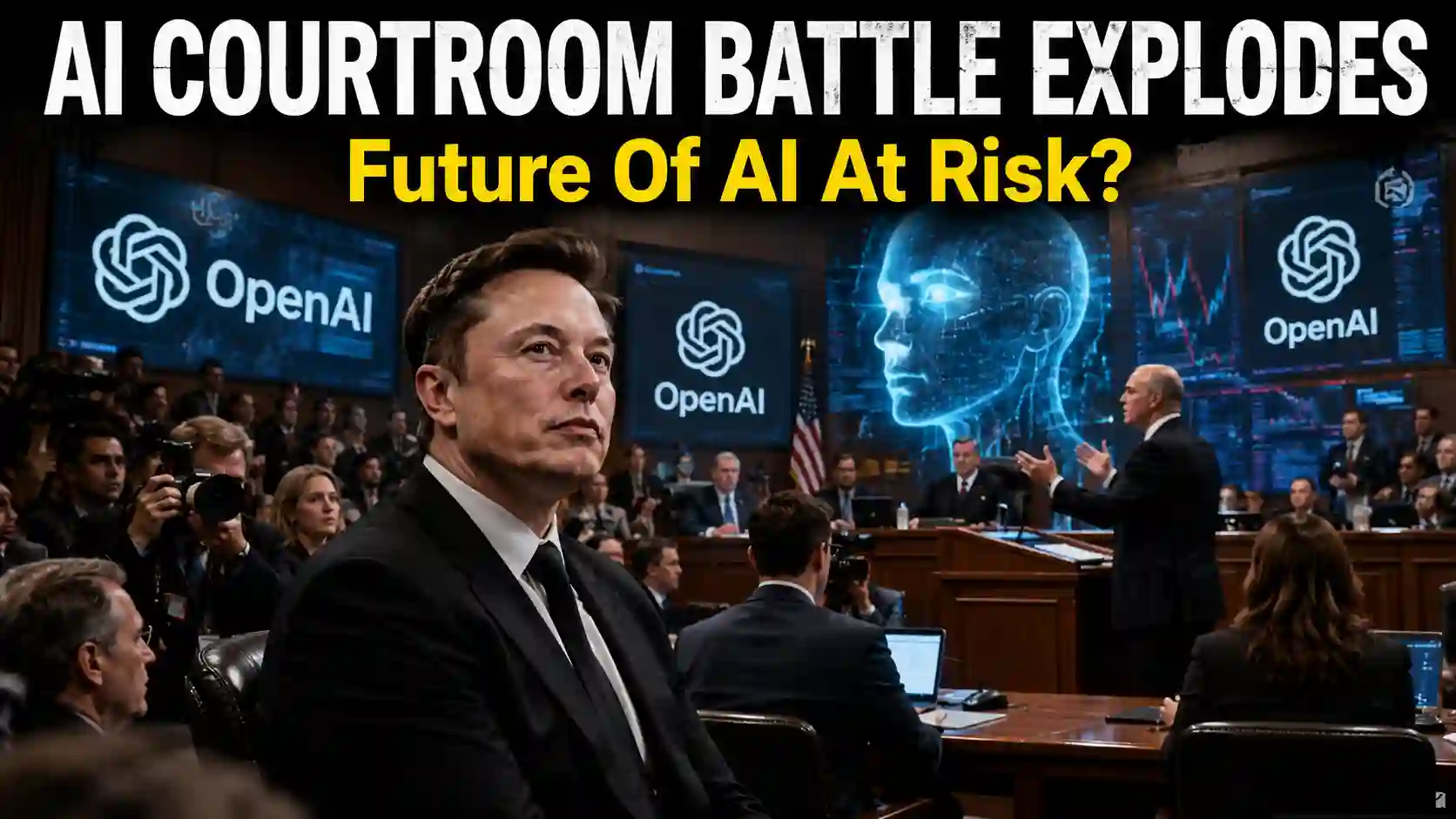
A powerful wave of shock is currently spreading across the AI world as the Open AI Lawsuit continues to gain massive global attention. This is not just another tech dispute or a normal business disagreement—it feels much deeper and far more serious, almost like something that could influence the entire future of artificial intelligence and how humans interact with it.
At AI Todays News, we are witnessing a situation that clearly goes beyond simple arguments between companies or individuals. What is unfolding now looks like a high-stakes battle over the direction of human intelligence itself, where decisions made today could shape how advanced AI systems evolve, behave, and impact everyday life in the future.
What began as a basic disagreement has now escalated into a full courtroom-level confrontation. It involves powerful questions around control, responsibility, trust, and the growing influence of money and major investors in shaping cutting-edge AI technologies that are becoming more advanced, more independent, and more important to global systems every day.
And at the center of all this tension lies one simple but extremely important question that everyone is now forced to think about: who should really have the power to control the future of artificial intelligence, and how that control could ultimately decide the direction of the world ahead?
WHAT HAPPENED?
The situation behind the Elon Musk OpenAI lawsuit began when serious concerns were raised about how OpenAI has changed its direction compared to the vision it originally started with. This is not just a small disagreement—it is rooted in deeper questions about purpose, responsibility, and the future of artificial intelligence itself.
Elon Musk has argued that OpenAI was originally created with a very clear and powerful mission: to develop artificial intelligence in a safe way and make sure it benefits all of humanity, not just a limited group or commercial interests. The idea was focused more on safety, openness, and long-term human welfare rather than pure business growth.
However, as time passed, OpenAI grew rapidly and transformed into a highly funded organization. It started working closely with global investors, large-scale partnerships, and major commercial systems. This shift brought more resources and power, but it also changed the structure and priorities of the organization in ways that raised concerns.
Because of this transformation, a major disagreement emerged about whether the original mission was still being followed in the same spirit or whether it had gradually shifted toward a more profit-driven and corporate direction.
What makes this case even more intense is that it is not limited to legal contracts or business arrangements. It is ultimately about who controls some of the most advanced AI systems ever created—systems that are becoming more powerful, more influential, and more deeply connected to human life every single year.
That is why the entire tech industry is watching this lawsuit very closely, because the outcome could set a major precedent for how future AI companies are built, managed, and controlled across the world.

WHY IT MATTERS
This case is not just important for Silicon Valley or big tech companies—it has a much wider meaning that directly connects to the real world and everyday human life. What is happening here could influence how artificial intelligence is controlled and used across the entire planet in the coming years.
Artificial intelligence is no longer a small or experimental technology. It has already become deeply integrated into daily life in ways most people don’t even notice. Whether it is helping companies automate jobs, supporting doctors in healthcare systems, improving learning tools in education, or predicting financial trends in markets, AI is already playing a major role in decisions that affect millions of people worldwide.
Now, if the control of such powerful systems becomes unclear, disputed, or concentrated in the wrong hands, it creates serious concerns. Questions about transparency, fairness, and accountability start to rise, because people naturally want to know who is actually behind the systems that are shaping their lives.
Across the world, these concerns are turning into important questions that society cannot ignore anymore. People are now asking who really has the authority to decide how AI will evolve in the future, who controls the data and the models that power these systems, and who ultimately benefits from the massive success and growth of artificial intelligence.
These are not simple or technical questions. They are deeply connected to the structure of future society, because the answers will decide how power, information, and opportunity are distributed in the AI-driven world.
Even governments, policymakers, and global regulators are carefully observing this situation. The outcome of this case could influence future AI laws, safety rules, and international policies, potentially shaping how artificial intelligence is developed and controlled across the entire world.
HOW IT WORKS
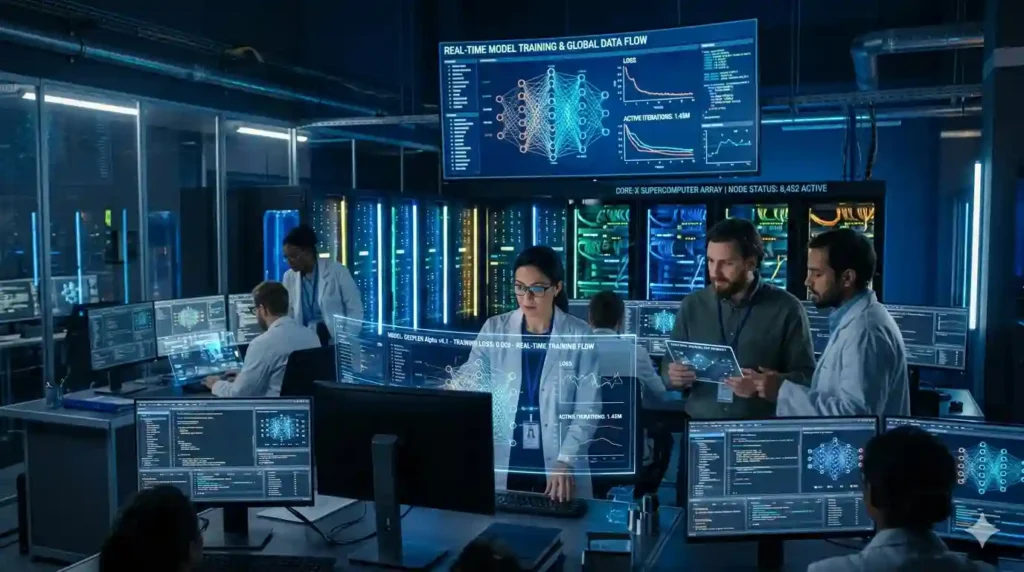
To really understand what is going on behind this lawsuit, it is important to first understand how modern artificial intelligence is actually built and developed. AI is not something simple or cheap—it is one of the most complex and resource-heavy technologies ever created by humans.
Developing advanced AI systems requires extremely powerful computing infrastructure that can process massive amounts of data at very high speed. This includes expensive GPU clusters, huge server networks, and specialized hardware designed specifically for machine learning tasks. Along with this, companies need access to large-scale datasets that train the AI to understand language, patterns, images, and real-world information.
But technology alone is not enough. Behind every powerful AI system, there are highly skilled research teams made up of engineers, scientists, and experts who continuously work on improving performance, safety, and accuracy. On top of that, this entire process requires constant and long-term funding, often running into billions of dollars.
As AI models become more advanced and capable, the cost of building and maintaining them increases dramatically. Because of this, companies often turn to outside investors, strategic partnerships, and commercial business models to keep development moving forward at a fast pace.
However, this is exactly where tension begins to build. When a technology that starts with a mission-driven vision—focused on safety, ethics, and human benefit—starts depending heavily on money, investment, and commercial growth, the balance can slowly shift.
At that point, difficult questions naturally arise. People begin to ask whether the original goal is still the priority, or whether the focus has started moving more toward business expansion and financial success.
This is the core issue the lawsuit highlights—the growing conflict between staying true to an original mission and adapting to the commercial realities of building powerful, large-scale artificial intelligence systems in today’s world.

REAL-WORLD IMPACT
Most people think a case like this only matters in court, but in real life it goes far beyond that. Once something like this starts in the AI industry, its effects slowly spread into many areas of the world.
When big AI companies face legal problems or uncertainty about their future, the entire tech industry starts reacting. Investors become careful with their money and avoid taking risks. Companies delay new projects because they are not sure what will happen next. Startups that depend on AI also start feeling worried because their future suddenly looks unclear.
If this uncertainty continues for a long time, it can slow down progress in technology. Companies stop experimenting with bold ideas, funding becomes harder to get, and new innovation slows down for a while. Even the business world reacts strongly because uncertainty always creates hesitation.
Smaller companies feel this pressure the most. They don’t have strong backup resources, so when rules become strict or unclear, it becomes difficult for them to grow. Even launching new products takes more time, effort, and approvals than before.
At the same time, governments may introduce new rules to control how artificial intelligence is developed and used. This is usually done to make things safer, but for companies it also means more restrictions, more checks, and slower work processes.
And the important part is that even normal people are affected, even if they don’t notice it directly. Today, almost everything we use on the internet—like search engines, social media, translation tools, mobile apps, and voice assistants—works with the help of artificial intelligence. So when this industry becomes unstable, that instability slowly reaches everyday life.
In simple terms, this is not just a legal fight between two sides. It is something that can influence technology, business, jobs, and the way people use digital services in their daily life.

FUTURE OUTLOOK
Right now, everyone is asking the same question—what will happen next after this lawsuit? The situation is still developing, and there is no single clear answer yet. But what is certain is that whatever happens next could have a big impact on the future of artificial intelligence.
There are a few possible directions this situation could take. Some experts believe that cases like this may push governments and regulators to introduce stricter rules for AI companies. This could mean more control, more transparency, and clearer guidelines about how advanced AI systems should be developed and used.
On the other hand, some people think this kind of legal pressure may force AI companies to rethink their structure from the very beginning. It could encourage them to clearly define their mission, responsibilities, and goals so that confusion like this does not happen again in the future.
There is also another strong possibility that this lawsuit may become a major turning point in the history of AI development. Sometimes, one case like this changes how the entire industry behaves, especially when it involves powerful technology and global attention.
One thing is very clear in all of this. Artificial intelligence is no longer just about creating new technology or improving software. It has now become something much bigger that involves control, responsibility, and influence on a global level.
And because of that, this case could play an important role in shaping how future AI systems are designed, who funds them, and how they are managed in the real world going forward.
VALUE INSIGHTS
Here are the key takeaways from this situation, explained in a simple and clear way so it is easy to understand how big and serious this topic really is.
- Artificial intelligence is no longer just a normal software tool. It is slowly becoming a global power system that influences decisions, industries, and even governments around the world.
- In the tech industry, there is a growing conflict between mission and money. Companies that started with a focus on safety and public benefit are now also dealing with heavy investment pressure and business goals.
- Transparency has become extremely important in AI development. People now want to clearly know how AI systems are built, how they make decisions, and who is controlling them behind the scenes.
- Legal cases like this are no longer just company issues. They can actually shape how future technology rules and regulations are created across the world.
- Decisions made in AI development are not limited to tech alone. They directly affect jobs, global economy, business systems, and even daily human life.
- Governments across the world are now closely watching AI companies because the impact of artificial intelligence is becoming too large to ignore or leave unregulated.
- Public trust has become one of the most important factors for any AI company. If people don’t trust the system, even the most advanced technology can lose its value.
- Because of growing concerns, AI regulation is expected to increase globally. More rules and guidelines may be introduced to control how AI is developed and used.
- Ethical AI development is becoming a top priority. This means companies are now expected to focus not just on performance, but also on fairness, safety, and responsibility.
- In the future, AI systems may need much stricter governance models, where every stage of development is monitored, controlled, and guided by clear rules to avoid risks.
KEY TAKEAWAYS
Here are the most important lessons from this entire situation, explained in a simple and human way so it’s easy to understand what is really happening behind the scenes.
- The Elon Musk OpenAI lawsuit is not just a normal legal case. It is changing the way people talk and think about artificial intelligence across the world, because it raises deep questions about how AI should be controlled and developed.
- AI governance is no longer just a technical topic. It has become a global issue where governments, companies, and experts all want clearer rules about how powerful AI systems should be managed.
- One of the biggest problems in the AI industry today is the conflict between mission and profit. Many companies started with a goal to help humanity, but business pressure and investment growth have created tension in that original mission.
- Court decisions in cases like this are very important because they can influence future AI laws. What happens in this lawsuit may become a reference point for how other AI cases are handled in the future.
- Artificial intelligence is now involved in almost every major industry. From healthcare to education, from finance to communication, AI is already deeply connected with how the world functions today.
- Transparency has become a basic requirement in AI systems. People now expect companies to clearly explain how their AI works, what data it uses, and how decisions are made.
- Investors are very sensitive to uncertainty in the AI sector. Even small legal or policy issues can change investment behavior and affect the entire market direction.
- Governments around the world are becoming more active in AI oversight. They are introducing new rules and monitoring systems to make sure AI development stays safe and under control.
- Public trust is now one of the most important factors for any AI company. Without trust, even the most powerful and advanced technology can lose its acceptance and value.
- In the future, AI systems are expected to face much stricter regulation. This means stronger rules, tighter control, and more responsibility for companies building these technologies.
ENDING
This is not just another tech news story or a normal headline that will be forgotten after a few days. What is happening here goes much deeper than that and connects directly to the future of technology and human life itself.
The Elon Musk OpenAI lawsuit is actually showing a much bigger struggle underneath the surface. It is about how artificial intelligence—and in a way, intelligence itself—is going to be controlled, guided, and shaped in the coming years and decades.
The outcome of this case is not limited to just one company or a few people. It has the potential to influence the entire direction of artificial intelligence around the world. The decisions made here could affect how AI is built, who controls it, and what rules will be followed in the future.
Because of all this, the entire world is paying close attention. Governments, companies, developers, and even everyday users are watching carefully, knowing that whatever happens next could shape the future of AI for everyone.
CTA
What do you personally think about the Elon Musk OpenAI lawsuit? This is not just a normal news story—it is the kind of situation that could actually change how the future of artificial intelligence is shaped. That’s why we really want to know your opinion on it.
Take a moment and share your thoughts in the comments below. Your point of view matters, especially on topics like this where the future of technology is being discussed in real time.
If you feel this information is important, share it with at least one person who should understand what is happening in the AI world right now.
And if you want to stay updated with every important change happening in the AI revolution, make sure you stay connected with AI TODAYS NEWS.
The world is changing very fast, and those who stay informed will always stay ahead.