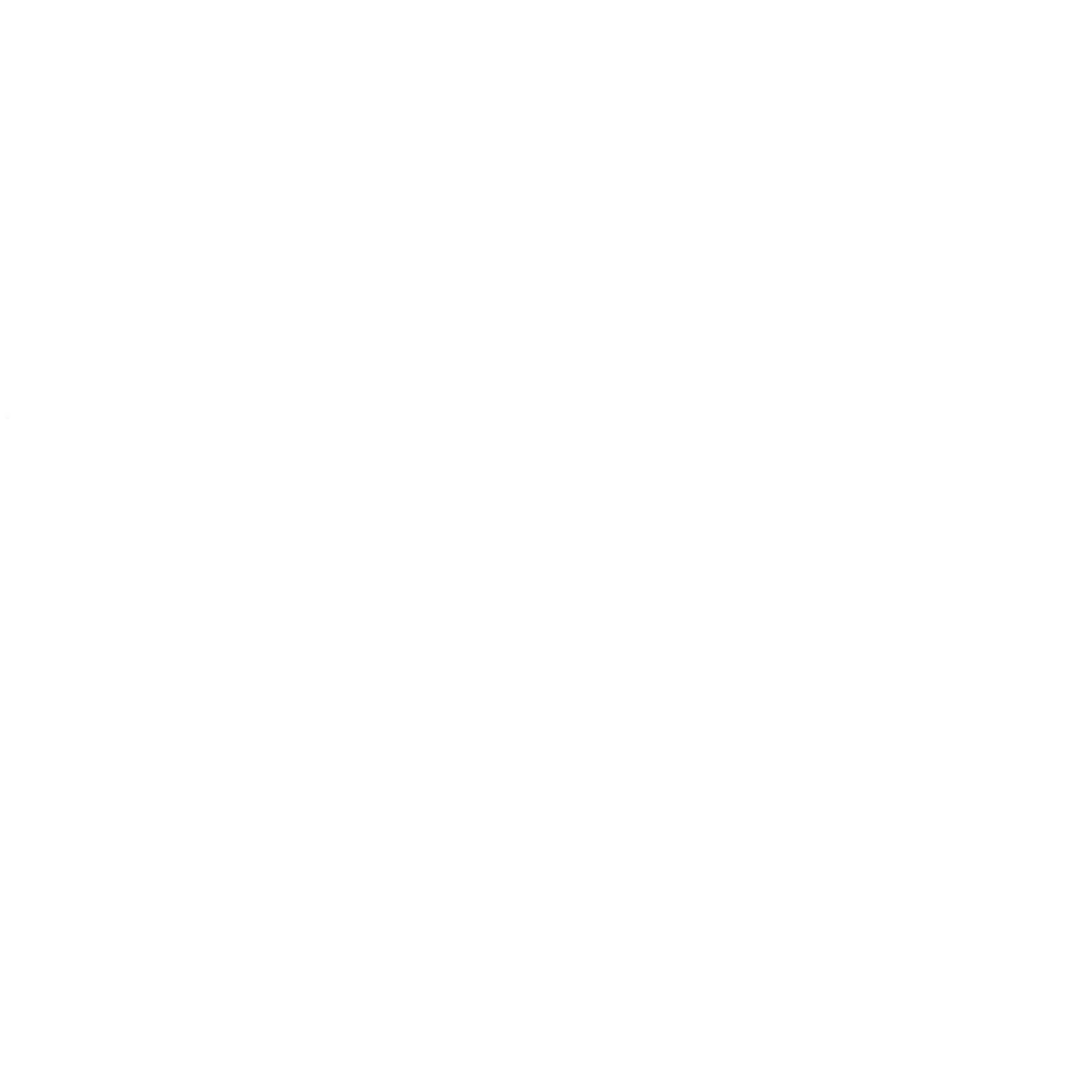

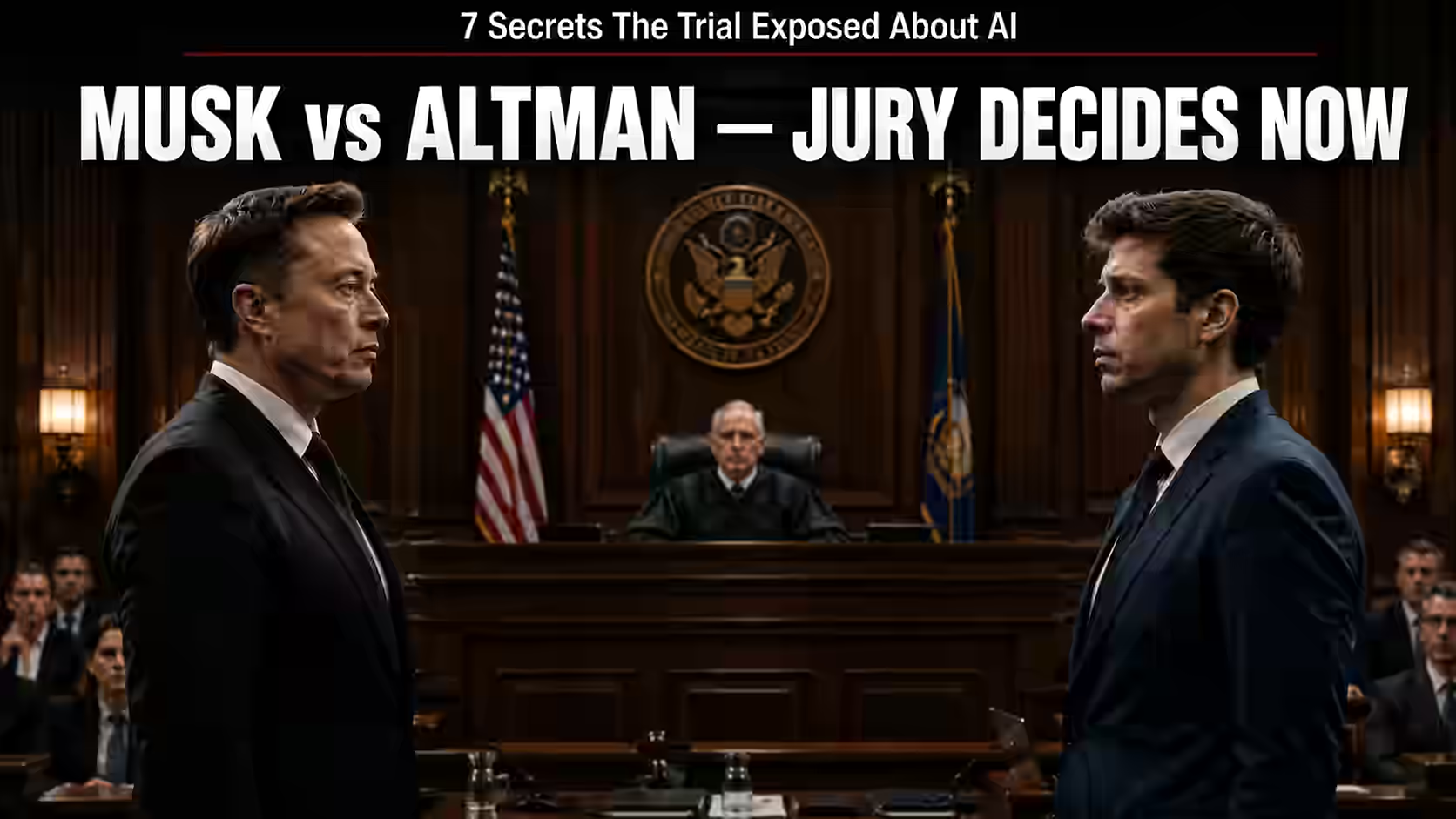
Table of Contents ( OpenAI Trial )
INTRODUCTION
He went to court to expose Sam Altman.
He ended up exposing himself.
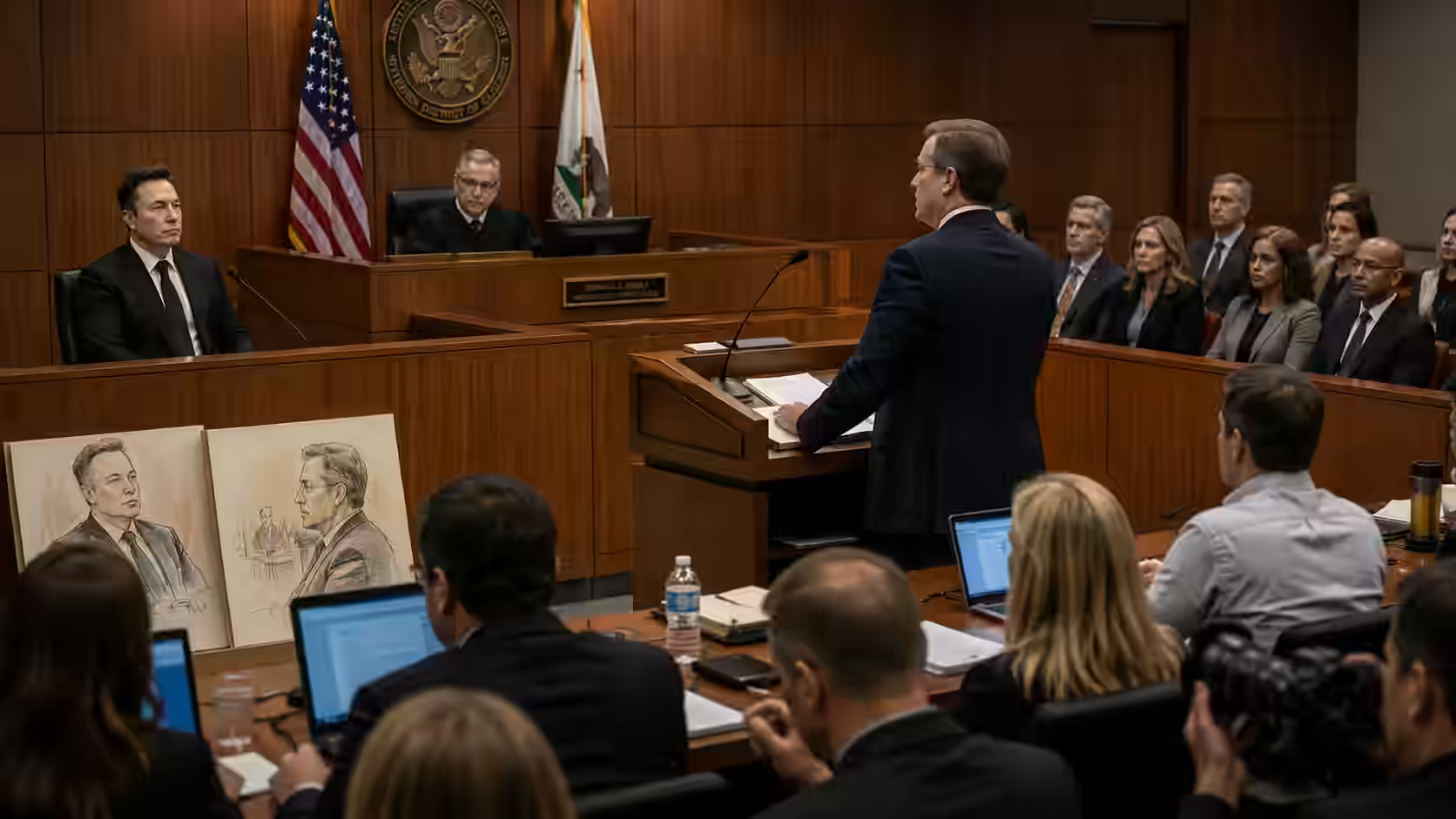
That, in the simplest terms, is what happened in the first three weeks of the Musk v. Altman trial — one of the most watched legal battles in the history of technology. The courtroom in Oakland, California became something none of the lawyers planned for: a confessional booth for Silicon Valley’s most powerful men.
Elon Musk, the world’s richest person, filed this lawsuit claiming OpenAI CEO Sam Altman had betrayed a promise — that OpenAI would always stay a nonprofit focused on humanity, not profit. Musk said he was deceived. He wanted Altman removed. He wanted OpenAI’s structure dismantled.
What he got instead was three weeks of revelations that stunned even the most seasoned tech journalists in the room. His own AI company, xAI, was caught copying OpenAI’s models. His own lawyer called Altman a liar — and Altman admitted under oath he had not always told the truth. And now, a nine-person jury is deciding whether the verdict will reshape the entire AI industry.
The deliberations are happening right now. Here is everything that came out before the jury left the room.
BACKGROUND
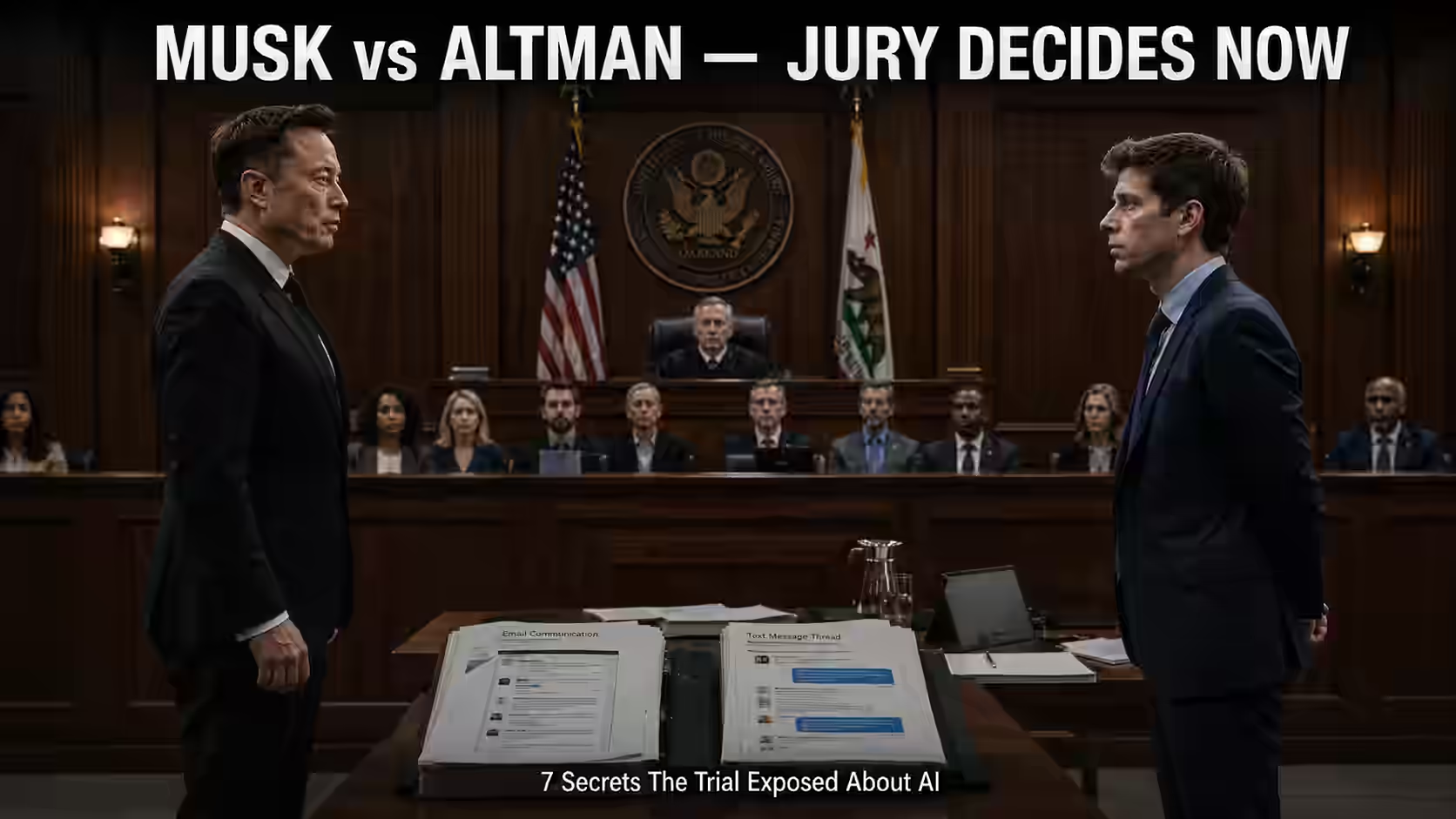
To understand why this trial matters so much, you have to go back to 2015.
That year, a small group of researchers and entrepreneurs gathered in San Francisco with a bold idea. They wanted to build artificial intelligence that would benefit all of humanity — not just one company, not just one investor. They called it OpenAI, and they set it up as a nonprofit specifically to keep it away from the gravitational pull of commercial profit.
Elon Musk was one of the founding members. He donated $38 million in the early years. He was involved in strategy, hiring, and direction. He genuinely believed, or at least said he believed, that OpenAI could be different from every other Silicon Valley company.
Then things changed.
In 2018, Musk left OpenAI’s board. The official explanation was a conflict of interest — Tesla was building its own AI systems, and Musk could not serve both. But court testimony has since painted a more complicated picture. Emails and text messages entered into evidence suggest Musk wanted majority control of OpenAI. When he didn’t get it, the relationship broke down.
After Musk’s departure, OpenAI continued growing — and growing fast. It created a capped for-profit subsidiary to attract the billions of dollars needed to train the most powerful AI models in the world. Microsoft became its biggest backer, investing $13 billion over several years. The nonprofit board remained, but its control over the company’s day-to-day operations weakened.
By 2024, OpenAI was valued at more than $850 billion by private investors. Sam Altman, who had been briefly removed as CEO in 2023 in a dramatic internal coup — only to be reinstated days later — was back in full control.
Musk, watching all of this from the outside, filed a lawsuit. He accused Altman and OpenAI president Greg Brockman of betraying the nonprofit mission. He called it stealing a charity.
The trial began in Oakland on April 28, 2026. It was scheduled to run through late May.
MAIN UPDATE
Three weeks of testimony produced more surprises than anyone expected.
The first shock came in week one, when Musk himself took the stand. Under cross-examination by OpenAI’s lead lawyer, William Savitt, Musk admitted something that made journalists in the courtroom start typing immediately.
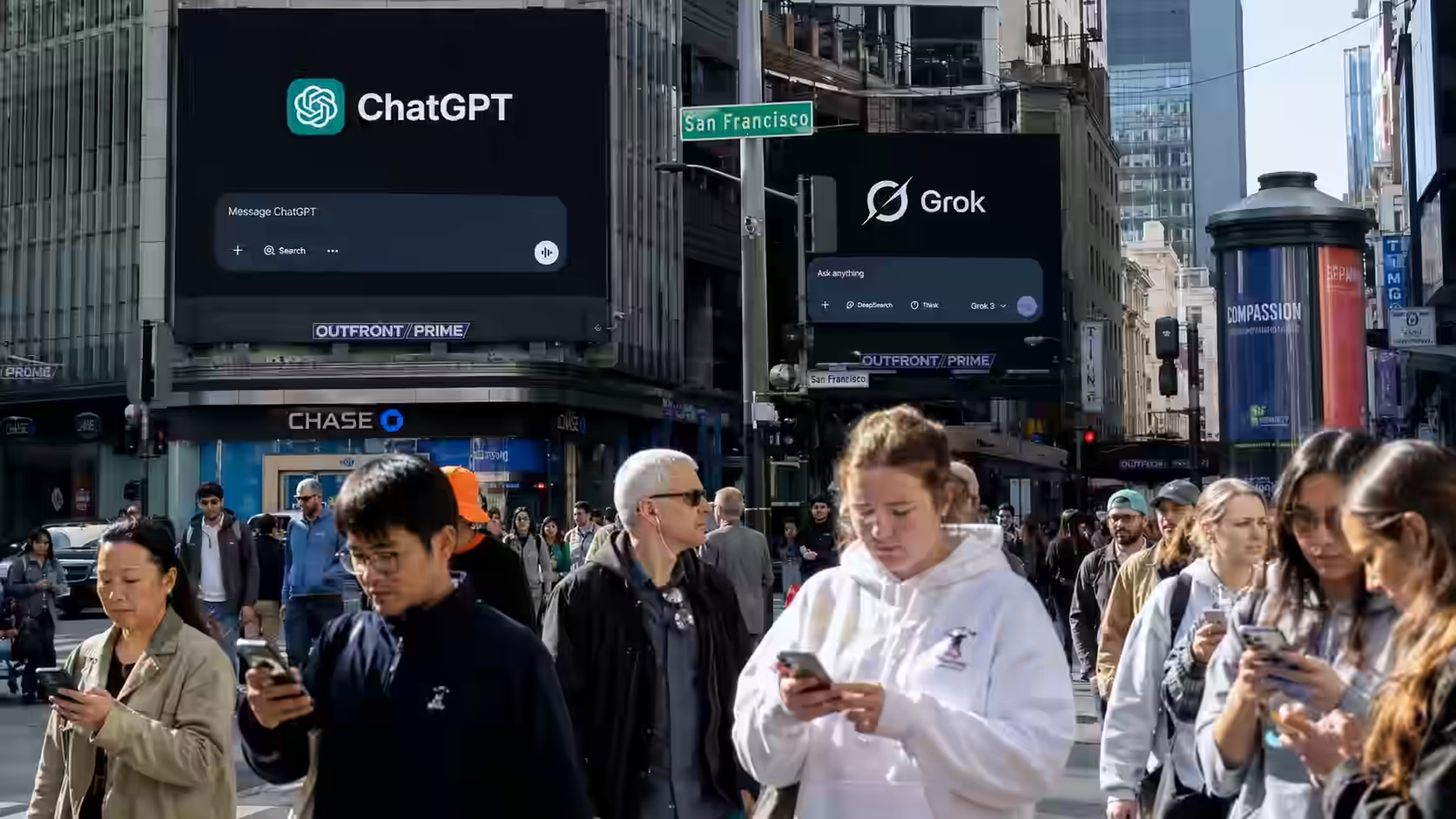
His own AI company, xAI — the company that makes the chatbot Grok — had used a technique called “distillation” to train its models using outputs from OpenAI’s own systems. Distillation means training one AI on the answers produced by another, more powerful AI. It is a shortcut. And it violates OpenAI’s terms of service.
The irony was not lost on anyone. The man suing OpenAI for betrayal had been quietly copying OpenAI’s work to build his competitor.
Musk’s explanation was brief. He said everyone does it. The judge, Yvonne Gonzalez Rogers, responded to one of his courtroom outbursts with equal brevity: “You’re not a lawyer, Elon.” It became one of the most quoted lines of the trial.
The second week brought more drama. Musk’s own texts were entered into evidence. One showed him messaging Meta CEO Mark Zuckerberg — the two men, normally rivals, appeared to be coordinating to block OpenAI’s restructuring and even explore buying OpenAI’s nonprofit assets together.
In week three, Sam Altman took the stand. For four hours, he answered questions in a blue suit and tie. Musk’s lawyer, Steven Molo, asked Altman directly: “Are you completely trustworthy?”
“I believe so,” Altman said.
Molo pushed further. Had Altman ever told a lie? “I’m sure there are some times in my life when I did not,” Altman replied. Had business associates called him a liar? “I have heard people say that,” he admitted.
Bret Taylor, chairman of OpenAI’s board, also testified. A lawyer showed him a text message from 2023, when the board was deciding whether to reinstate Altman after his brief ouster. Taylor had said he would only join the board if Altman was back. The lawyer asked if, at that point, Taylor had determined Altman was not always transparent with the board. “That’s correct,” Taylor said. “I did not know all the facts at the time.”
Meanwhile, Altman turned the narrative around on Musk. He testified that Musk had wanted 90 percent control of OpenAI early on. “He had demotivated some of our most key researchers,” Altman said. “I don’t think Mr. Musk understood how to run a good research lab.”
Closing arguments concluded on May 14, 2026. The nine-person jury began deliberating. Their verdict is advisory — meaning the judge will make the final legal decision. But the findings will carry enormous weight.
If Musk wins, Altman and Brockman could be removed. OpenAI’s entire for-profit restructuring could be unwound. An IPO that would value the company near $1 trillion would be delayed or derailed entirely.
If Musk loses, his credibility takes a serious hit — and the AI industry moves forward under its current structure.
IMPACT ANALYSIS
This trial has already changed things — even before the verdict arrives.
For the AI industry, the most important revelation is the distillation admission. Musk confirmed what many had long suspected: AI companies routinely train their models using outputs from each other’s systems. This has massive implications for intellectual property law, competition regulation, and the value of building frontier AI models in the first place. If any company can copy another’s work cheaply through distillation, the billions spent on compute infrastructure may not create the competitive moats investors think they do.
For OpenAI specifically, the stakes are enormous. The company is currently raising up to $40 billion in new funding, led by SoftBank. It is planning an IPO that could value it at close to $1 trillion. A court ruling that forces it to unwind its for-profit structure — even partially — would throw both of those plans into serious uncertainty.
For Sam Altman personally, the trial has revealed how fragile his hold on the company actually was in 2023, when he was briefly removed. The text messages and board testimony suggest that even his closest allies had doubts about his honesty. He survived that crisis. Whether the court gives Musk’s side enough to force a second one remains to be seen.
For ordinary people watching the trial, the most important story may be the simplest one. Two of the most powerful men in technology — men who together influence tools used by hundreds of millions of people every day — are fighting over money, control, and who gets to decide the future of artificial intelligence. Neither of them was elected to that role. Neither of them will be accountable to the public in the way a government would be.
That question — who should actually control AI — is the one the trial keeps raising but cannot answer.
FUTURE OUTLOOK
Whatever the jury recommends, this trial has already set something in motion.
The distillation admission alone will fuel years of legal battles. OpenAI has reportedly been working with Google and Anthropic through the Frontier Model Forum to share information on combating distillation — particularly from Chinese AI companies. Musk’s admission that xAI did the same thing from within the United States will complicate those conversations significantly.
If the judge sides with Musk on even part of his case, the most immediate consequence would be chaos for OpenAI’s fundraising and IPO plans. SoftBank and other investors would likely pause or renegotiate commitments. The company would face governance hearings, restructuring costs, and potentially the removal of its leadership. AI development at OpenAI would slow — and competitors including xAI, Anthropic, and Google DeepMind would benefit.
If the judge sides with OpenAI entirely — which most legal analysts consider the more likely outcome — the verdict will confirm that AI companies can transition from nonprofit to for-profit without breaking the law, even when founding donors object. That will make it easier for other AI startups to follow the same path in the future.
In either case, the trial has forced a public conversation about something the industry had preferred to keep private: who made the promises that built these companies, whether those promises were kept, and who gets to decide when they have been broken.
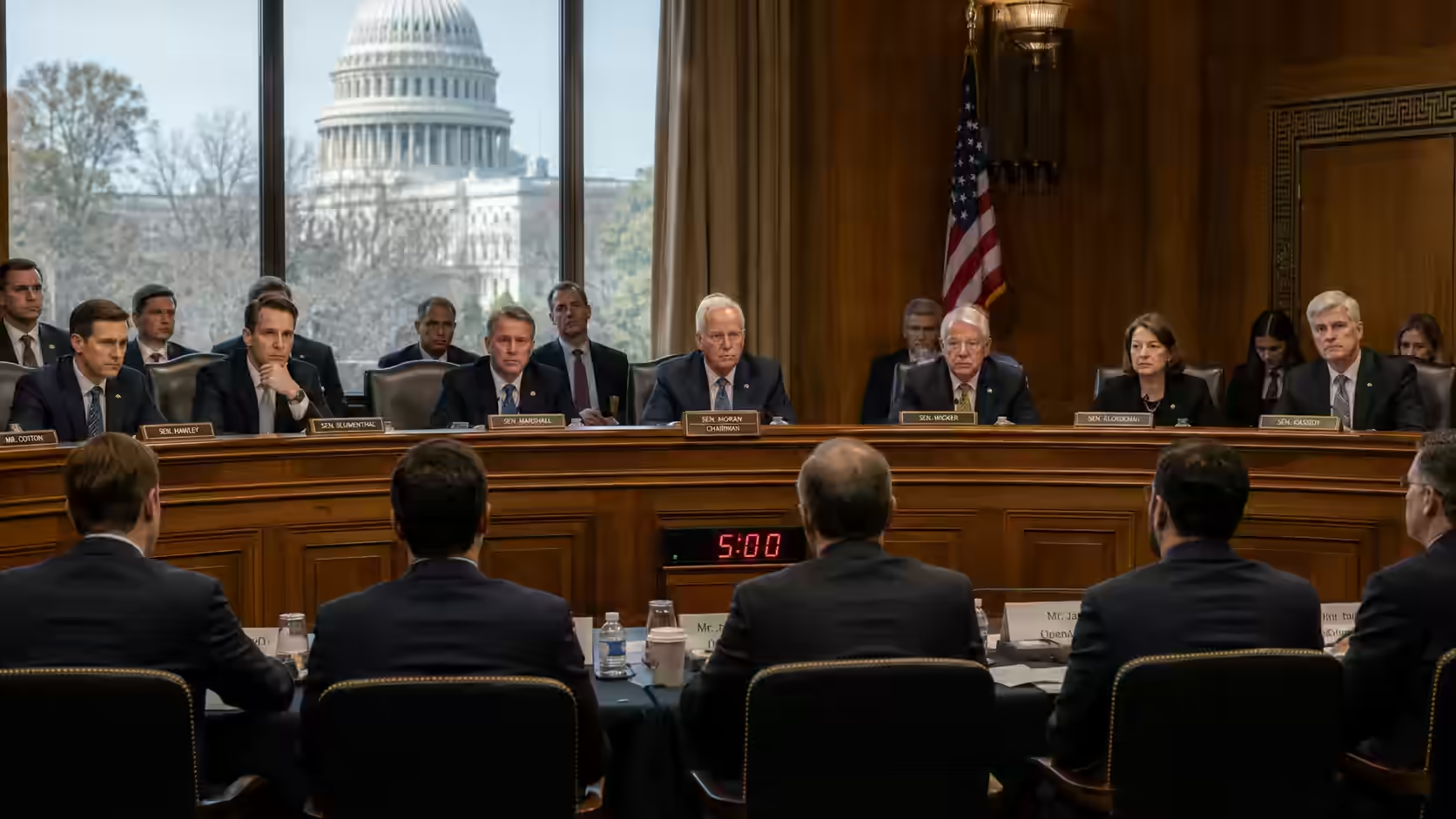
Regulators in the United States, the European Union, and the United Kingdom have all been paying close attention. The verdict will inform their thinking on AI governance for years to come.
For now, the jury deliberates. And the world waits.
EXPERT INSIGHTS
- Judge Yvonne Gonzalez Rogers (courtroom statement): When Musk argued legal points from the witness stand, the judge told him directly: “You’re not a lawyer, Elon.” She also noted: “I suspect there’s plenty of people who don’t want to put the future of humanity in Mr. Musk’s hands either.”
- Sam Altman (court testimony, May 12, 2026): “It does not fit with my conception of the words ‘stealing a charity’ to look at what has actually happened here.” On Musk’s motivations: “What he really cared about was control.”
- Elon Musk (court testimony, April 2026): “If you have someone who is not trustworthy in charge of AI, I think that’s a very big danger for the whole world.” On xAI distilling OpenAI models: “Everyone does it.”
- Bret Taylor, OpenAI board chairman (court testimony): When asked if he had known Altman was not always fully transparent with the board before reinstating him in 2023: “That’s correct. I did not know all the facts at the time.”
- MIT Technology Review reporter (on courtroom atmosphere): “There is just so much scheming among Big Tech executives. You know about it vaguely, but to hear firsthand accounts and read their emails and text messages is mind-blowing.”
- Fortune magazine legal analysis: “Musk’s admission that xAI distills OpenAI’s models violates OpenAI’s terms of service — meaning it was likely done through fake or fraudulent accounts. It was something of a bombshell.”
- Most legal analysts (consensus view): Musk’s case is considered weak by most observers. The judge noted before trial that if the jury finds the lawsuit was filed too late under the statute of limitations, she will likely side with OpenAI entirely.
KEY TAKEAWAYS
- Elon Musk sued OpenAI and CEO Sam Altman claiming they “stole a charity” by converting the nonprofit into a for-profit company — and is asking for Altman’s removal and up to $150 billion in damages.
- During his own testimony, Musk admitted that his AI company xAI had used “distillation” — copying outputs from OpenAI’s models — to train its own chatbot Grok. This violates OpenAI’s terms of service.
- Sam Altman testified for four hours. Under cross-examination, he admitted he had not always told the truth and that business associates had called him a liar. He also said Musk wanted 90 percent control of OpenAI early on.
- Text messages entered as evidence showed Musk and Mark Zuckerberg coordinating to block OpenAI’s restructuring — two of Silicon Valley’s biggest rivals working together against a common opponent.
- OpenAI’s board chairman Bret Taylor admitted under oath that he had not known all the facts about Altman’s transparency with the board when he supported his reinstatement as CEO in 2023.
- The jury’s verdict is advisory — meaning the judge makes the final legal decision. But the outcome will directly affect OpenAI’s planned IPO, its $40 billion fundraising round, and the future leadership of the company.
- If Musk wins even partially, Altman and Brockman could be removed from their roles. If he loses, it confirms that AI nonprofits can legally convert to for-profit structures without donor consent.
- The trial has exposed how the most powerful AI companies in the world are actually built — with shortcuts, broken promises, and private deals that the public never sees.
CONCLUSION
Three weeks. Nine jurors. One question.
Who really gets to decide the future of artificial intelligence?
Elon Musk went to court to expose Sam Altman. He ended up exposing himself — and the entire industry along with him. The trial pulled back a curtain that Silicon Valley had kept firmly closed. What was behind it: broken promises, copied models, secret texts between billionaires, and board members who admitted they did not know the full truth.
The verdict will come. Whatever it says, the story it has already told cannot be untold.
What do YOU think — should Musk win this case, or is this just a billionaire trying to hurt a competitor? Drop your thoughts below. Share this with one person who needs to know what is really happening in AI. Follow AI Today’s News to stay ahead every day.