

Table of Contents ( Gates Foundation AI )
INTRODUCTION
Two hundred million dollars. Four years. And a promise that AI will reach children in India who have never had access to a quality teacher.
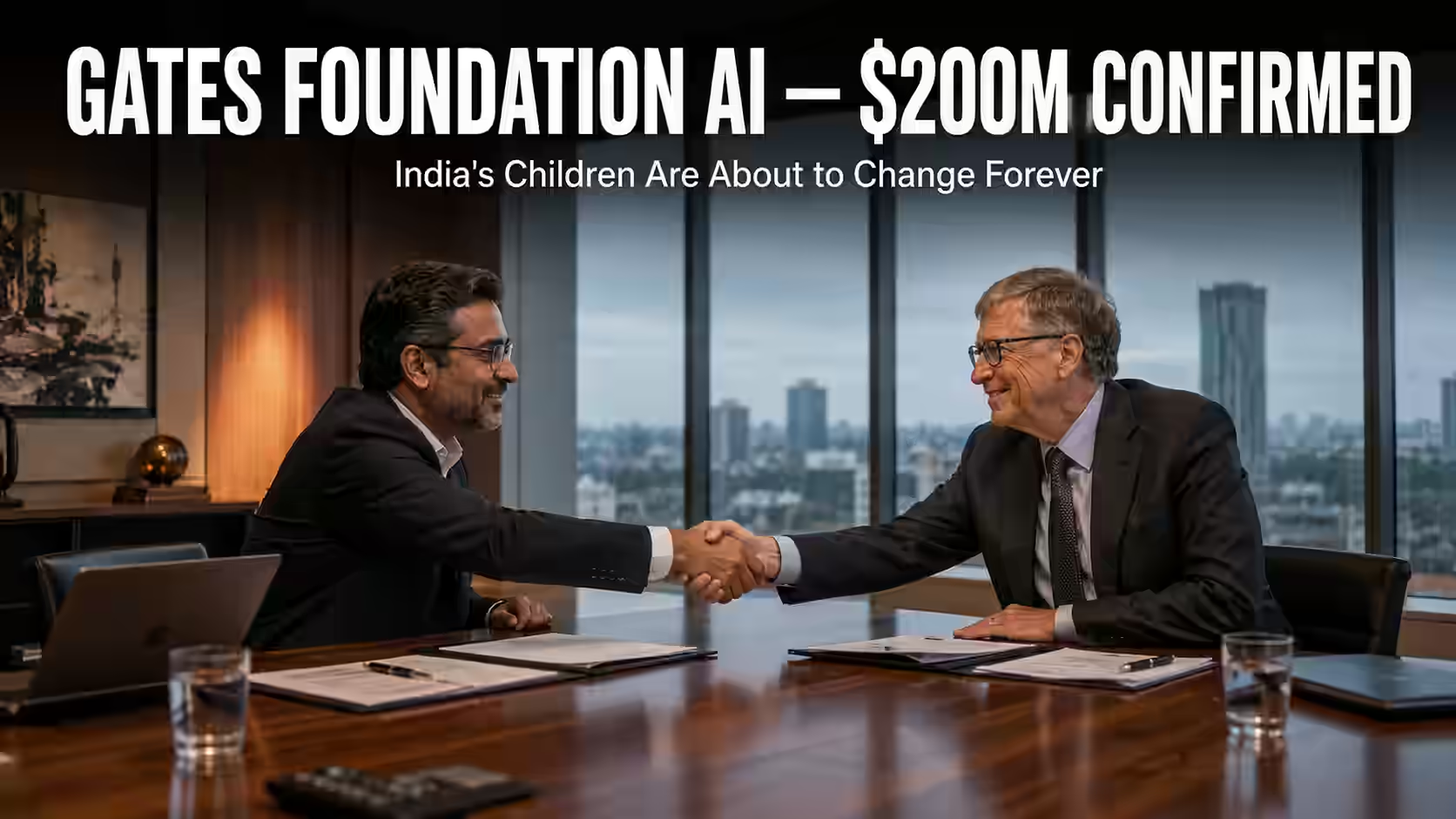
On May 14, 2026, Anthropic and the Bill and Melinda Gates Foundation announced one of the most significant AI partnerships ever directed at the developing world. The deal combines grant funding, technical support, and full access to Claude — Anthropic’s flagship AI model — across four areas that matter most to the world’s most underserved populations: global health, life sciences, education, and economic mobility.
For India, the announcement landed differently than most tech news does. This was not a company announcing a new product or a valuation milestone. This was a direct commitment — backed by two of the most credible names in AI and global philanthropy — to build AI tools specifically for Indian children, in Indian languages, for Indian classrooms.
The first public tools are expected to be released before the end of 2026. The work has already begun.

BACKGROUND — Why This Partnership Was Inevitable
To understand why this deal matters, you have to understand what both organizations were trying to solve — and why neither could solve it alone.
The Gates Foundation has spent more than two decades working on global health and education in low and middle income countries. It has funded vaccine programs, malaria research, agricultural productivity tools, and school systems across Africa and Asia. But the foundation has always operated with a fundamental constraint: human expertise does not scale fast enough. Training a doctor takes years. Training a teacher takes years. And in countries where both are in short supply, that gap between what is needed and what is available has been nearly impossible to close.
Anthropic, on the other hand, had built one of the most capable AI systems in the world — but faced a different problem. Claude was extraordinary at helping enterprise clients in San Francisco and London write code and analyze contracts. But the company had a stated mission that went beyond enterprise software. Anthropic’s founding documents describe a commitment to ensuring that the benefits of AI reach everyone, not just those who can already afford it. That mission had not yet been tested at scale in the places where the need was greatest.
The two organizations found each other at exactly the right moment.
Bill Gates had already signaled his thinking publicly. He said that AI would soon eliminate chronic shortages of skilled workers like doctors and teachers. He argued that AI’s transformative potential in healthcare, education, and drug discovery justified massive investment — comparing the current moment not to a speculative bubble but to the early days of the internet. When the Gates Foundation had earlier partnered with OpenAI on a $50 million project called Horizon 1000 — aimed at supporting healthcare clinics in Africa — it was a test of whether frontier AI could actually deliver in the field.
The Anthropic partnership is four times larger. And it goes significantly further.
MAIN UPDATE — What the $200M Partnership Actually Does
The announcement on May 14, 2026 was specific. This is not a vague commitment to “explore AI for good.” It is a structured four-year program with defined targets across four areas.
Education — The India Focus
The largest visible impact for India sits in the education component of the deal.
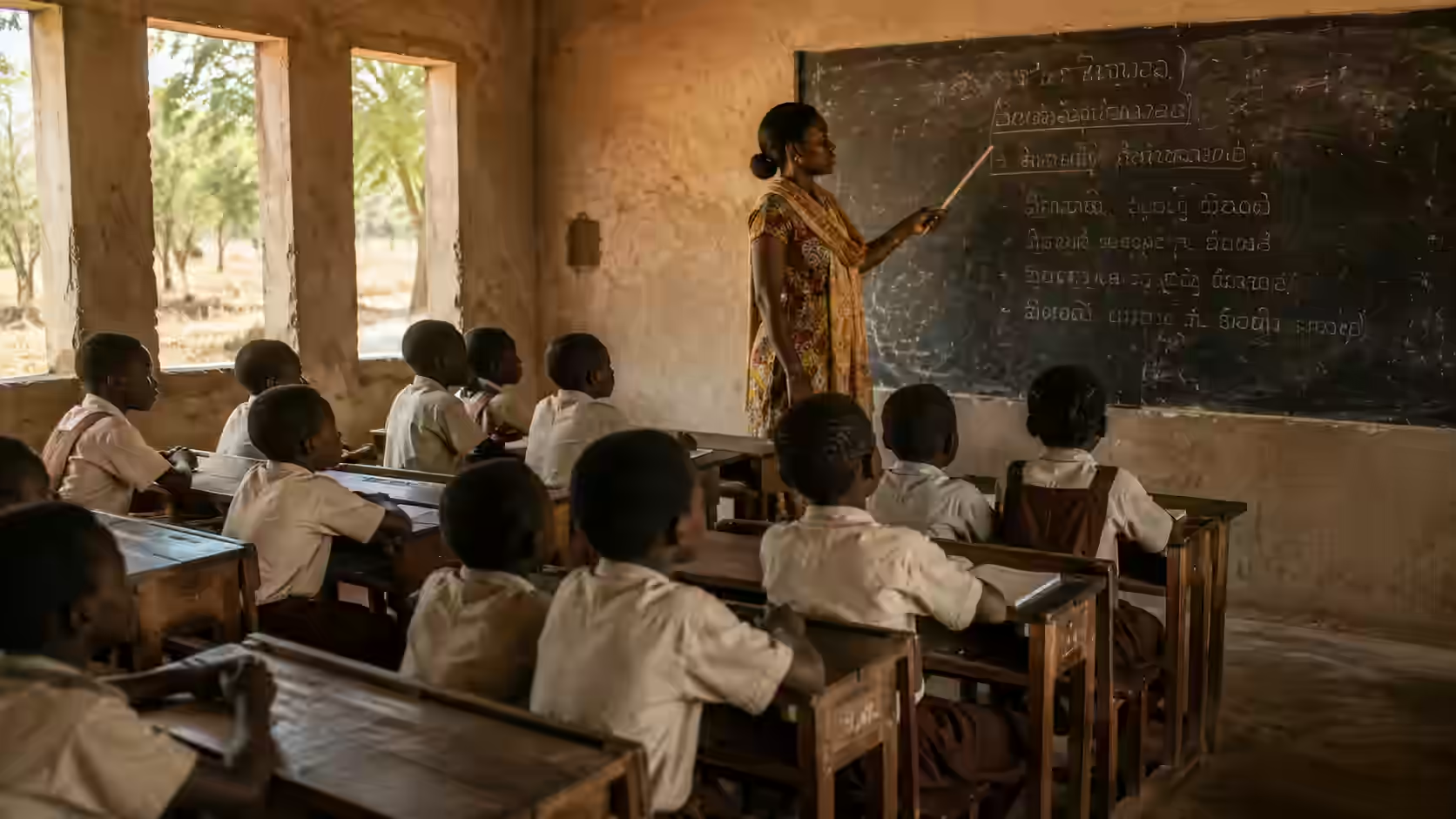
Anthropic and the Gates Foundation are co-developing AI-powered applications specifically designed for foundational literacy and numeracy. These are not advanced academic tools. They are built for the child who is still learning to read. The child who is still learning basic arithmetic. The child in a rural school in Uttar Pradesh or Odisha who may have a teacher managing sixty students in a single classroom.
These apps are being built as part of the Global AI for Learning Alliance — known as GAILA — a broader coalition of organizations working to bring AI-assisted learning to the developing world. The first public releases of these tools are expected before the end of 2026.
Alongside the apps, the partnership is building what are called knowledge graphs — structured systems that map relationships between curriculum content, teaching materials, and student needs. These knowledge graphs are being designed specifically to support teachers in India and sub-Saharan Africa, giving AI tools a much deeper understanding of local educational contexts than a general language model would have on its own.
The partnership is also creating public benchmarks and datasets — open resources that any developer or government can use to evaluate how well AI tools actually perform on education tasks in Indian contexts. This public-goods approach directly addresses one concern that Indian policymakers have raised repeatedly: that AI tools built in Silicon Valley often perform poorly in Indian languages and contexts.
Health — The Bigger Picture
While education is the most visible component for India, the health portion of the deal is actually larger in scope.
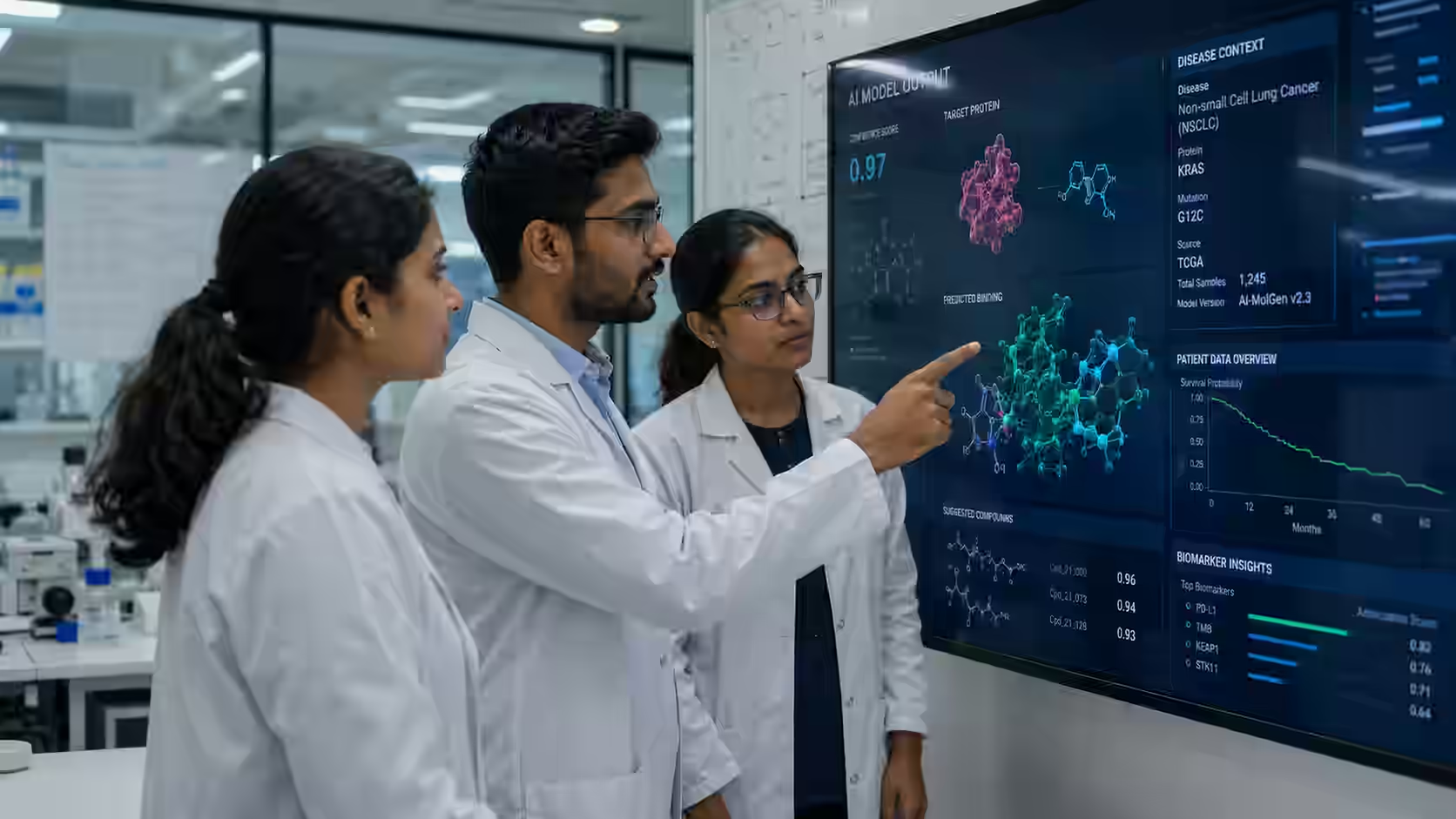
Anthropic will work with the Gates Foundation on programs aimed at accelerating vaccine and therapy development for diseases that pharmaceutical companies have historically had little financial incentive to prioritize. The specific diseases named in the announcement are polio, HPV, and preeclampsia.
HPV causes roughly 350,000 deaths annually. Around 90 percent of those deaths occur in low and middle income countries. Preeclampsia — a dangerous pregnancy disorder — is similarly concentrated in exactly the places where medical infrastructure is weakest. Claude will be used to computationally screen vaccine and therapy candidates before they move into pre-clinical development, potentially shortening the early-stage research timeline significantly.
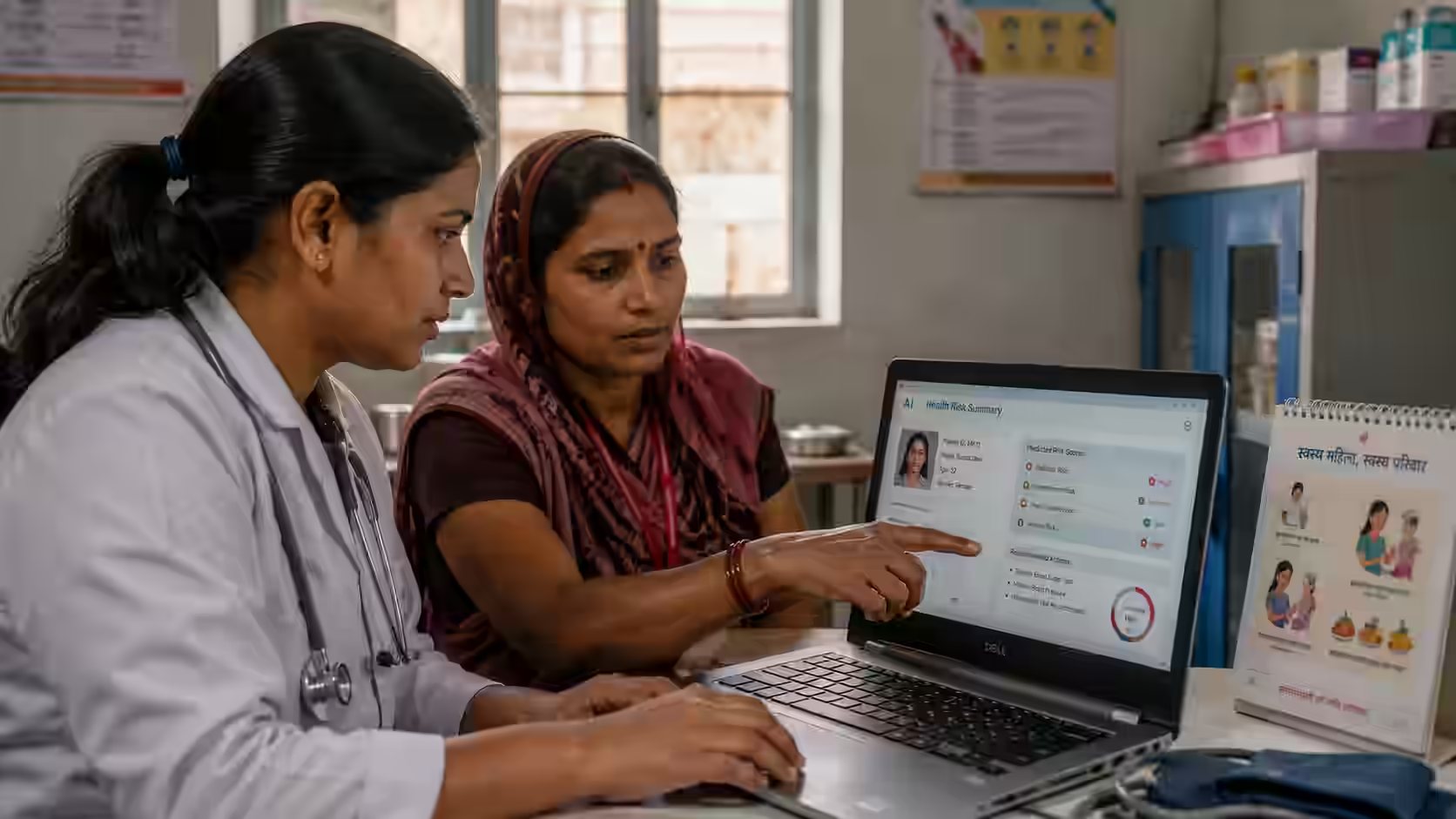
Anthropic is also partnering with the Institute for Disease Modeling — a research group within the Gates Foundation — to improve forecasting models for malaria and tuberculosis. Claude will help make those forecasting systems accessible to public health practitioners who are not modeling specialists, which means front-line health workers in district hospitals and rural clinics could gain access to tools that were previously only available to specialized researchers.
Agriculture and Economic Mobility
The fourth pillar of the partnership directly addresses the livelihoods of nearly two billion people globally whose incomes depend on smallholder farming.
Anthropic will build agriculture-specific improvements to Claude, including datasets of local crops and evaluation benchmarks for agricultural applications. These tools will be released as public goods — meaning any developer, government, or nonprofit can use them without cost.
For India, where millions of farming families make decisions about planting, irrigation, and market timing based on incomplete information, AI tools that understand local crops, local languages, and local conditions could represent a genuine shift in agricultural productivity.
IMPACT ANALYSIS — What Changes for Real People
The short-term impact of this deal will be measured in tools — apps, benchmarks, datasets — most of which will arrive before the end of 2026. But the longer-term impact is harder to quantify, and it cuts in several directions at once.
For Indian students, the most immediate change will be access. India’s education system has made extraordinary progress in the last two decades — enrollment rates have climbed, infrastructure has improved, and digital connectivity has expanded rapidly. But the quality gap — the difference between what students in well-funded urban schools receive and what students in under-resourced rural schools receive — has not closed at the same pace.
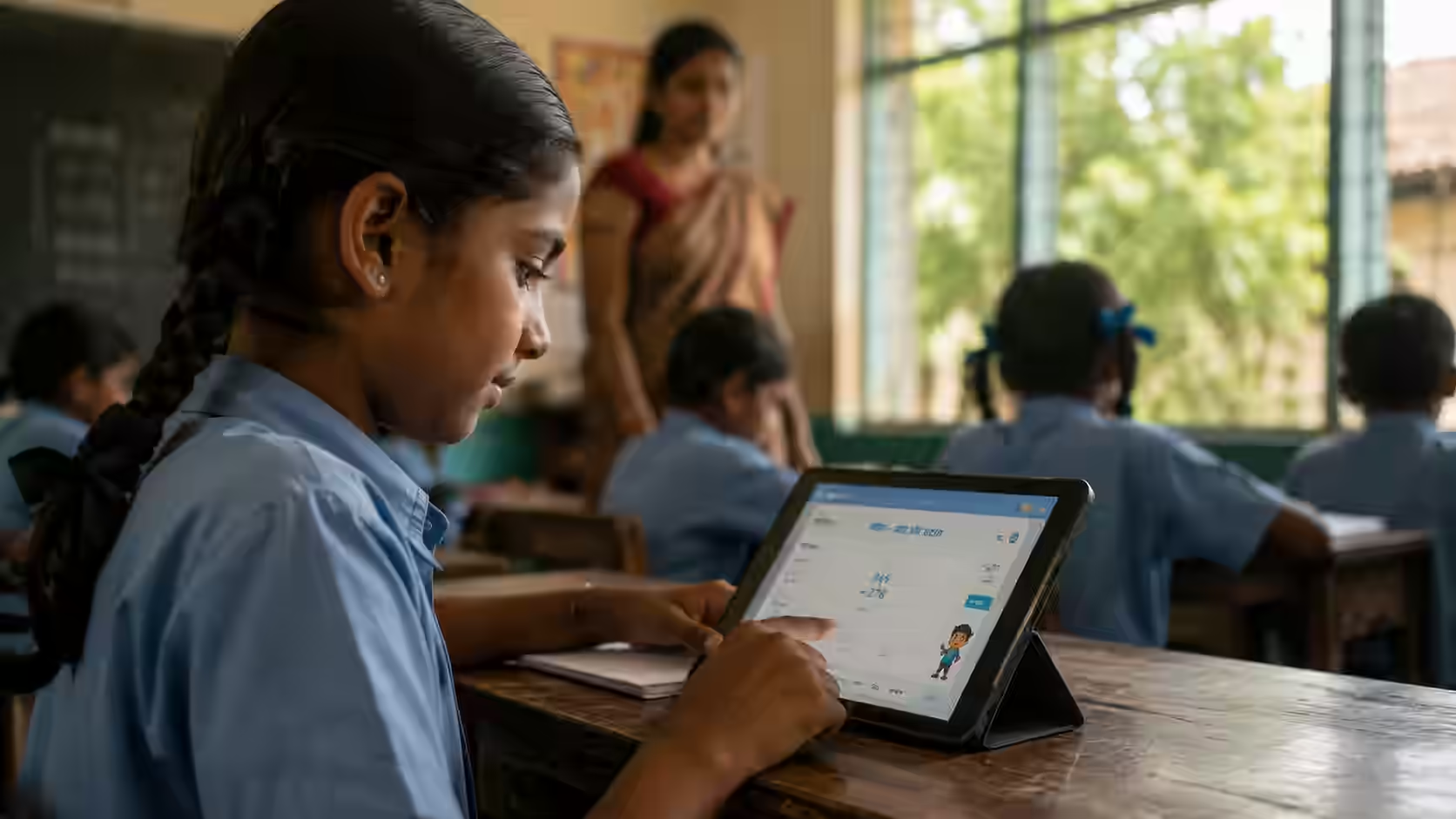
AI-powered tutoring tools that can adapt to an individual student’s level, provide immediate feedback, and do so in the student’s mother tongue, represent a genuine opportunity to compress that quality gap. Not to solve it overnight — but to make meaningful progress at a speed that traditional teacher training programs cannot match.
For India’s health system, the disease forecasting and vaccine development components of the deal address a structural problem that has persisted for decades. Low and middle income countries bear a disproportionate share of the global burden from diseases like malaria, tuberculosis, and HPV. Yet the commercial incentives for pharmaceutical companies to develop new tools for these diseases are weak. Philanthropic-backed AI research that can accelerate the early stages of that work — before it becomes attractive to commercial investment — fills a gap that has cost millions of lives.
The risk side of this deal is worth naming honestly. AI tools built for education can amplify existing inequalities if they are not designed carefully. A tool that works well for Hindi-speaking students in one state may perform poorly for students in Tamil Nadu or West Bengal. The public benchmarks and datasets being created as part of this partnership are designed specifically to catch that problem — but they will need ongoing attention and iteration.
FUTURE OUTLOOK — What Comes Next
The four-year timeline of this partnership means that its full impact will not be visible until 2030. But the trajectory it sets is clear — and it points toward something that has never existed before at this scale.
For the first time, a frontier AI company is committing significant engineering resources to building tools that are specifically optimized for Indian educational contexts. Not adapted from English-language tools. Not translated. Built from the ground up with Indian students, Indian teachers, and Indian curricula in mind.
That distinction matters more than it might seem. The history of technology in education is full of tools that worked beautifully in the countries where they were designed and underperformed badly in the countries they were supposed to serve. The knowledge graphs being developed for Indian and African teachers represent an attempt to solve that problem structurally — by giving AI systems a deep, locally grounded understanding of what teachers and students actually need, not what a general language model assumes they need.
By 2028, if the partnership proceeds as planned, India could have a generation of students who have had consistent access to AI-powered tutoring throughout their primary education. The research on what that does to learning outcomes does not yet exist — because this has never been done at scale before. This partnership will generate that research.
On the health side, the timeline for impact is longer but the stakes are higher. If Claude-assisted computational screening shortens the early-stage development timeline for vaccines targeting diseases like HPV and preeclampsia, the downstream effect could be measured in hundreds of thousands of lives — primarily in countries like India.
Bill Gates has predicted that AI will eliminate chronic shortages of skilled workers like doctors and teachers within this decade. This partnership is the most concrete step anyone has taken toward testing whether that prediction is correct.
EXPERT INSIGHTS
- Anthropic (official statement, May 14, 2026): “This commitment is central to Anthropic’s efforts to extend the benefits of AI in areas where markets alone will not.”
- Bill Gates, Gates Foundation: Gates has publicly predicted that AI will soon eliminate chronic shortages of skilled workers — doctors and teachers — and argued the current AI investment era is comparable to the early internet, not a speculative bubble.
- Anthropic Beneficial Deployments Team: The team leading this partnership provides Claude credits and engineering support specifically to partners in global health, life sciences, education, and economic mobility — operating separately from Anthropic’s commercial enterprise division.
- Tech Startups analysis (May 2026): The deal positions Anthropic within a growing segment of AI deployment focused less on direct monetization and more on long-term ecosystem influence and institutional adoption across the Global South.
- CIOL analysis (May 2026): Noted that the partnership reflects an industry trend where frontier AI companies are moving beyond chatbots and productivity tools toward public-interest deployments requiring longer timelines, infrastructure coordination, and policy engagement.
- Reuters (May 2026): Confirmed that Anthropic’s contribution comes through technical staff support and Claude usage credits, while the Gates Foundation contributes grant funding, program design, and philanthropic expertise — a structure designed to combine commercial AI capability with development-sector experience.
KEY TAKEAWAYS
- Gates Foundation AI partnership with Anthropic was confirmed on May 14, 2026 — committing $200 million over four years to global health, education, life sciences, and economic mobility.
- AI-powered literacy and numeracy apps are being built specifically for Indian and African students as part of the Global AI for Learning Alliance (GAILA).
- Knowledge graphs designed for Indian and African teachers will be released as public goods — meaning any developer or government can use them at no cost.
- Claude will be used to computationally screen vaccine and therapy candidates for polio, HPV, and preeclampsia — diseases that affect low and middle income countries disproportionately.
- Anthropic is partnering with the Institute for Disease Modeling to improve malaria and tuberculosis forecasting tools for frontline health workers.
- Agriculture-specific improvements to Claude will be built and released publicly, designed to support smallholder farmers using local crop data and local language inputs.
- The Gates Foundation AI deal with Anthropic is four times larger than its earlier $50 million partnership with OpenAI (Horizon 1000) announced in January 2026.
- First public tools from this partnership — benchmarks, datasets, and knowledge graphs — are expected to be released before the end of 2026.
- The partnership is structured so that Anthropic contributes technical resources and Claude access while the Gates Foundation contributes funding, design expertise, and implementation experience.
- This is the first time a frontier AI company has committed dedicated engineering resources to building education tools specifically optimized for Indian educational contexts from the ground up.
CONCLUSION
Two hundred million dollars is a large number. But what makes this partnership significant is not the money — it is the specificity of what the money is being used to build.
AI tools designed for Indian children in Indian languages. Disease forecasting systems for frontline health workers in rural clinics. Vaccine screening for diseases that pharmaceutical companies have ignored for decades. Agriculture tools built around local crops and local knowledge.
The Gates Foundation AI partnership with Anthropic is a direct test of whether AI can do what its most ambitious advocates claim it can — compress decades of human development into years, and deliver that progress to the people who need it most.
The first results arrive before the end of 2026. India is watching.
What do YOU think about this Gates Foundation AI deal for India? Drop your thoughts below. Share this with one person who cares about India’s future. Follow [AI TODAYS NEWS] to stay ahead every day.